A bare wall stares back at you every single day. You know it needs something, but the thought of creating a gallery wall feels overwhelming. Too many frames? Not enough? What if it looks chaotic instead of curated? Here’s the truth: gallery wall art isn’t rocket science. You just need to understand a few key principles and trust your eye. By the end of this guide, you’ll know exactly how to create a gallery wall that makes your space feel finished and intentional.
Jump to:
What Exactly Is Gallery Wall Art?
Think of it as a curated collection of framed pieces arranged on your wall. Typically between four and twenty artworks—paintings, drawings, photographs, prints—organized either in a structured grid or a more organic layout.
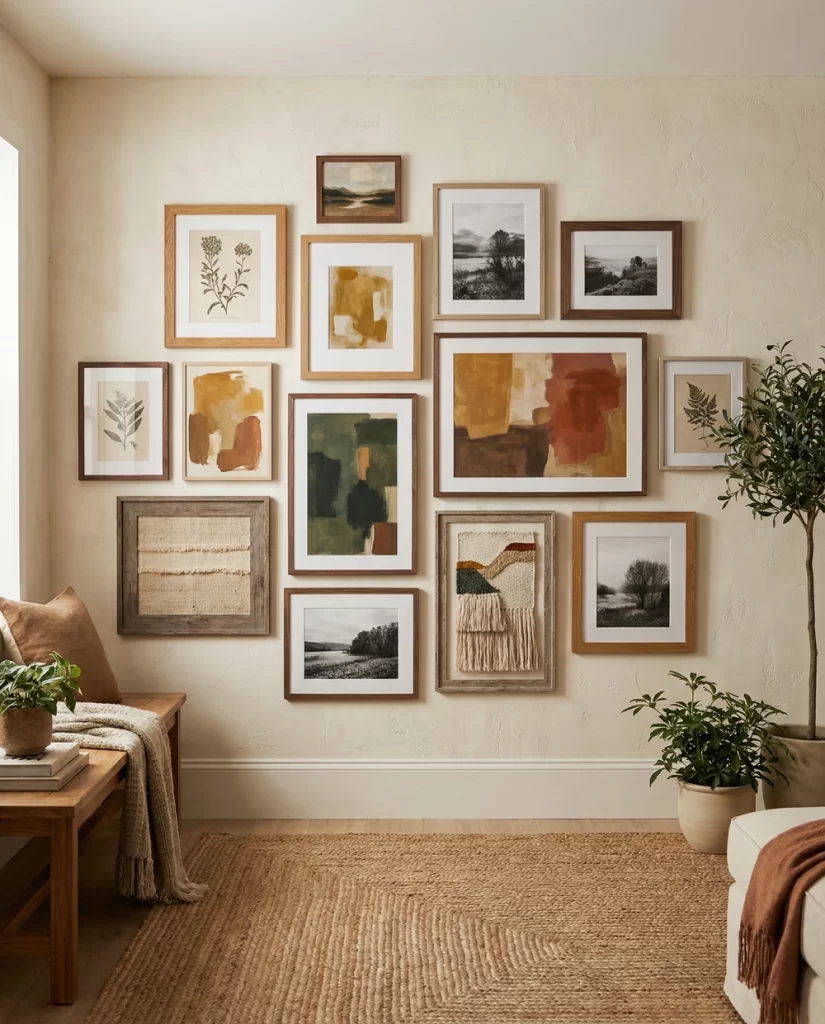
Gallery wall art transforms a blank wall into a storyboard. It tells a story about what you love, where you’ve been, or simply what catches your eye. And unlike a single large piece, it gives you flexibility to add, remove, or swap frames as your taste evolves.
The beauty is that you’re not limited to one style. Mix vintage family photos with modern abstract prints. Combine black-and-white photography with colorful African textile prints. The rule is that there’s no rule.
Perfect Spots for Your Gallery Wall Art
Location makes or breaks your gallery wall. Choose the right wall, and your art becomes a focal point. Choose wrong, and it’ll feel cramped or out of place.
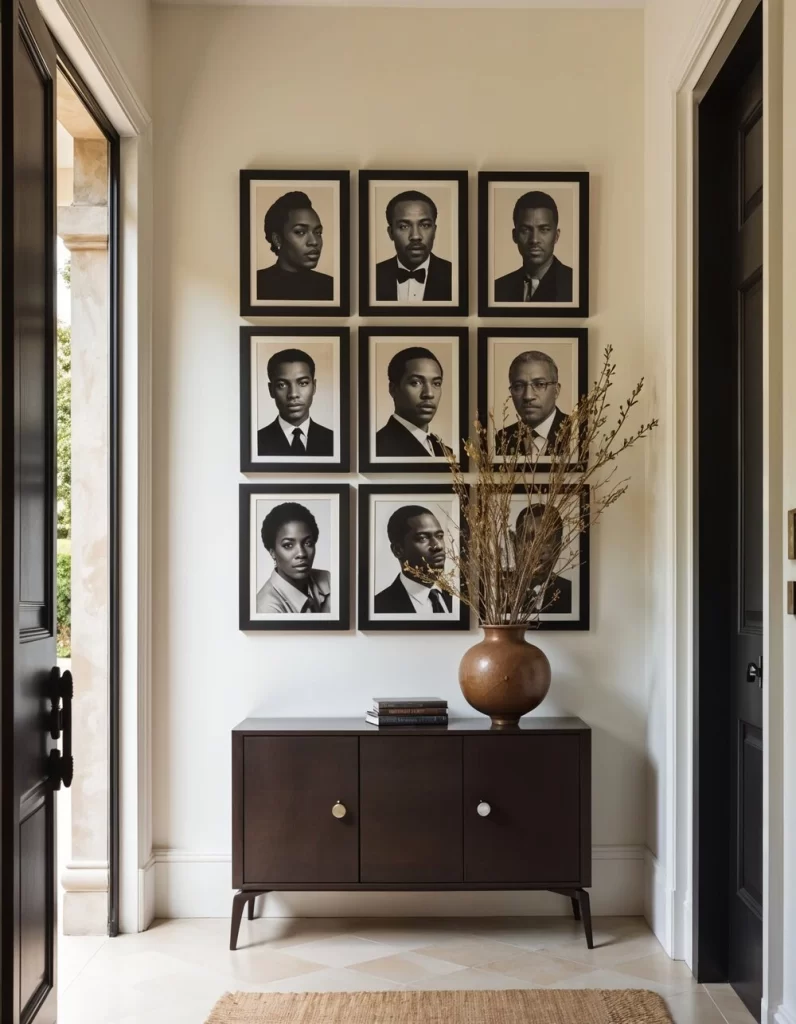
Where Gallery Wall Art Shines
Gallery walls work best in spaces where you want to create visual interest:
- Entryways: Welcome guests with a vibe right from the door
- Hallways: Transform boring pass-through spaces into mini galleries
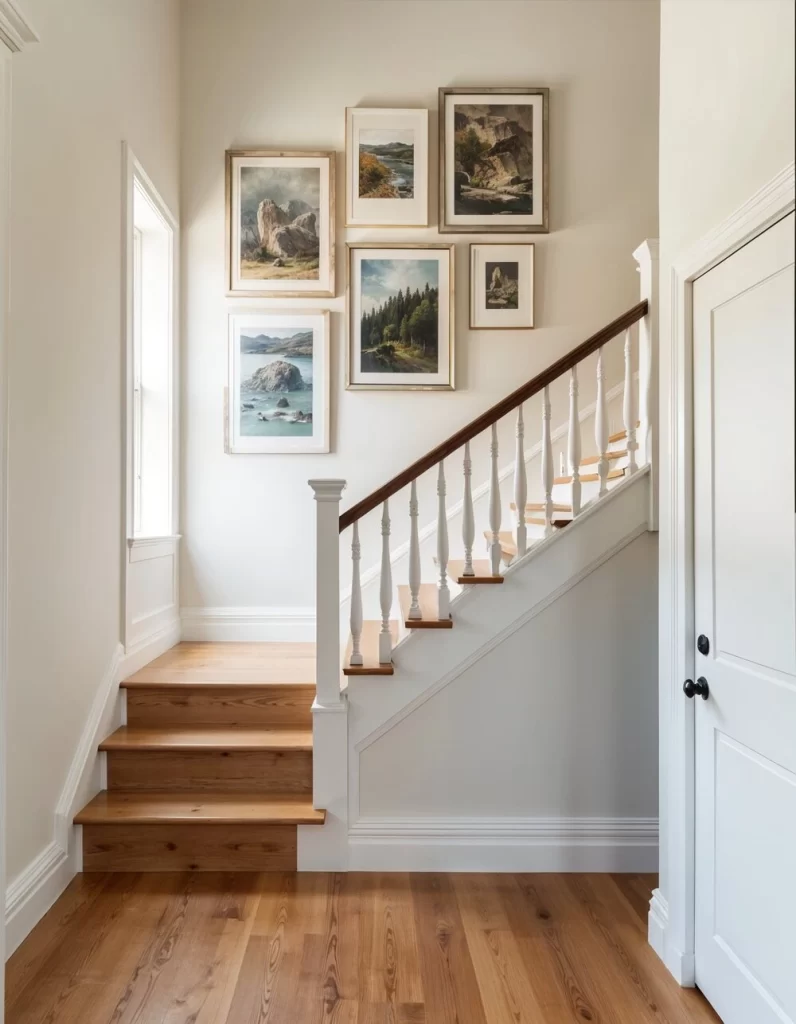
- Staircases: Fill that awkward vertical space with purpose
- Large living room walls: Anchor your seating area with art
- Home offices: Surround yourself with inspiration while you work
Where to Skip the Gallery Wall
Some rooms need calm over visual stimulation:
- Bedrooms: You want restful vibes, not busy walls
- Bathrooms: Humidity and art don’t always mix well
- Kitchens: Functional spaces benefit from simpler decor
Also consider your wall size. You need enough room for frames to breathe. A cramped gallery wall feels claustrophobic. And ideally, you want blank space across from your gallery wall. If you’re facing another decorated wall, the visual competition gets overwhelming.
You May Also Like: Simple Living Room Wall Design | 12 Ideas You’ll Love
Gallery Wall Art Ideas: What Goes on Your Wall?
This is where it gets fun. Technically, anything can go up on your gallery wall. But having a direction makes the whole process easier and the result more cohesive.
Pick Your Theme
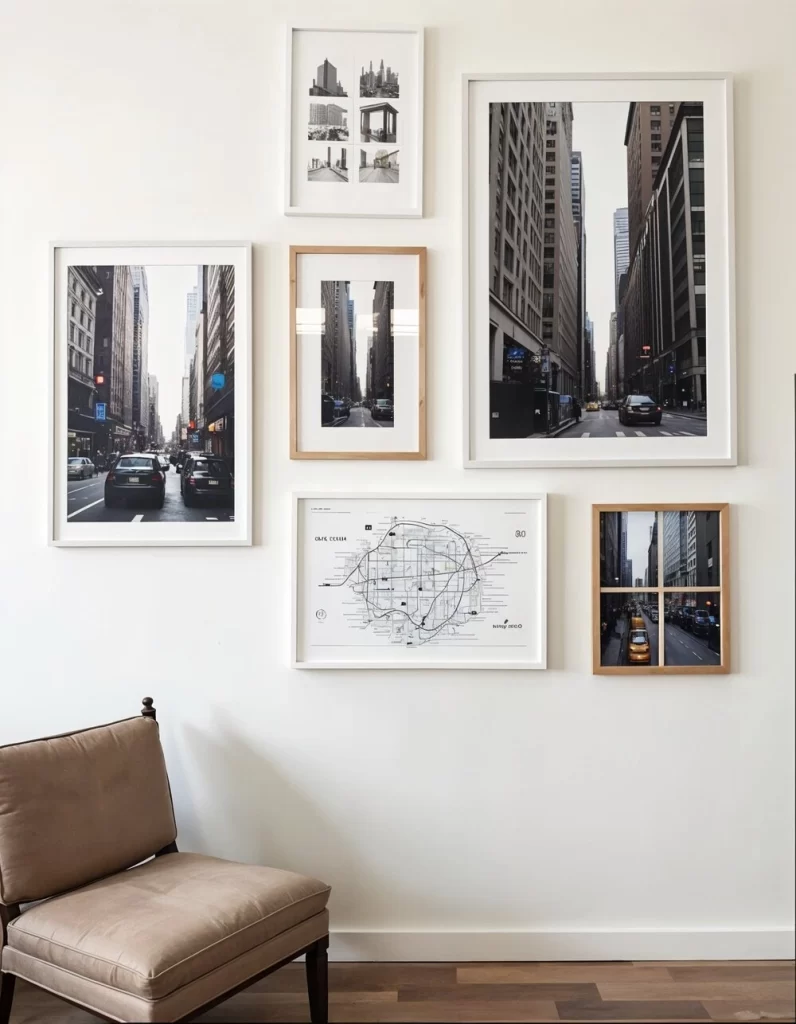
Themes create instant harmony. Consider:
- Nature: Botanical prints, landscape photography, bird illustrations
- Travel: City maps, landmark photos, vintage travel posters
- Music: Vinyl covers, concert posters, instrument photography
- Family: Personal photos across different eras and generations
I once saw an entryway gallery wall featuring only black-and-white photos of public figures the homeowner admired. Simple concept, powerful execution. Everything worked together because the theme was crystal clear.
Pick Your Color Palette
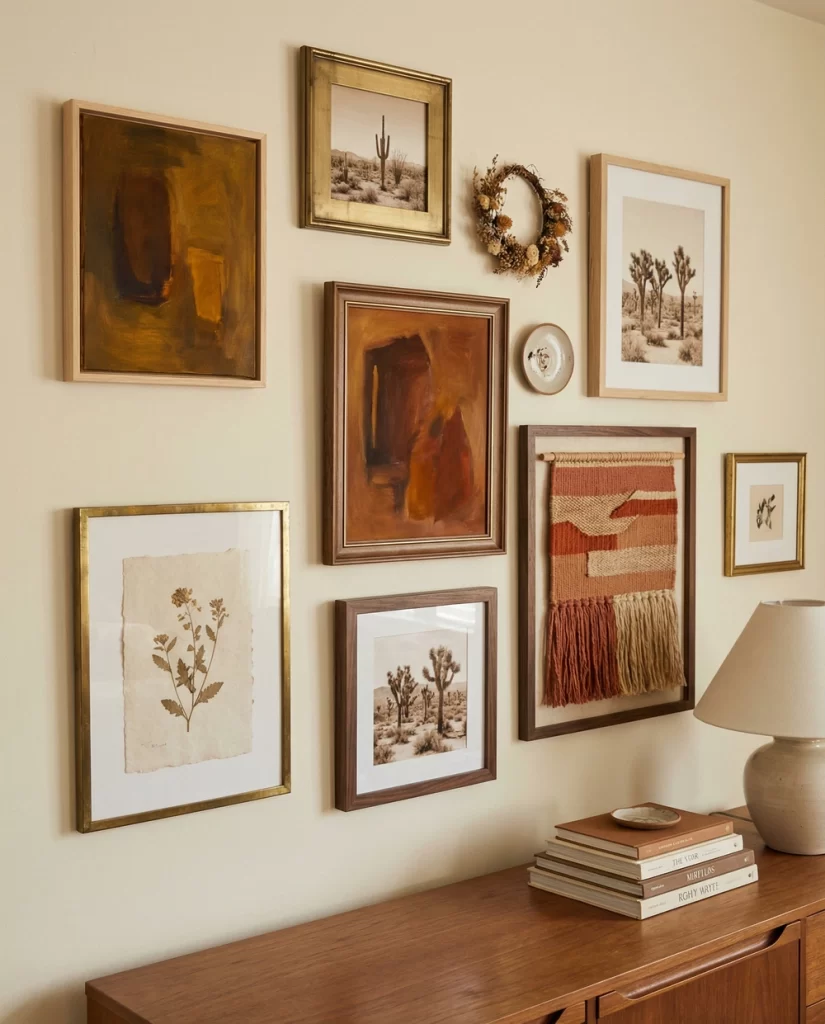
This approach is foolproof. Choose two to three colors, and suddenly everything coordinates itself.
Go for:
- Monochrome elegance: Black and white for timeless sophistication
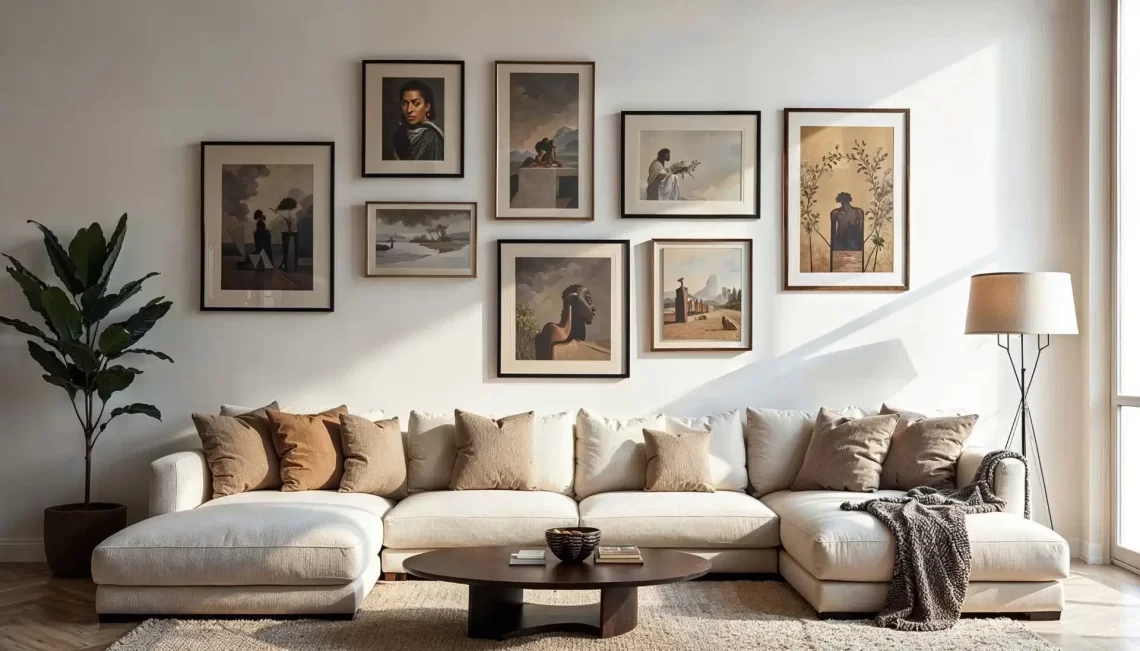
- Earthy warmth: Terracotta, ochre, cream—especially gorgeous with African art
- Deep colors: Navy blues, rich greens, burgundy for drama
- Soft neutrals: Beige, taupe, ivory for calm spaces
When in doubt, this is my go-to strategy. Pick colors that complement your room, stick to your palette, and your gallery wall art will naturally figure itself out.
Pick Your Style
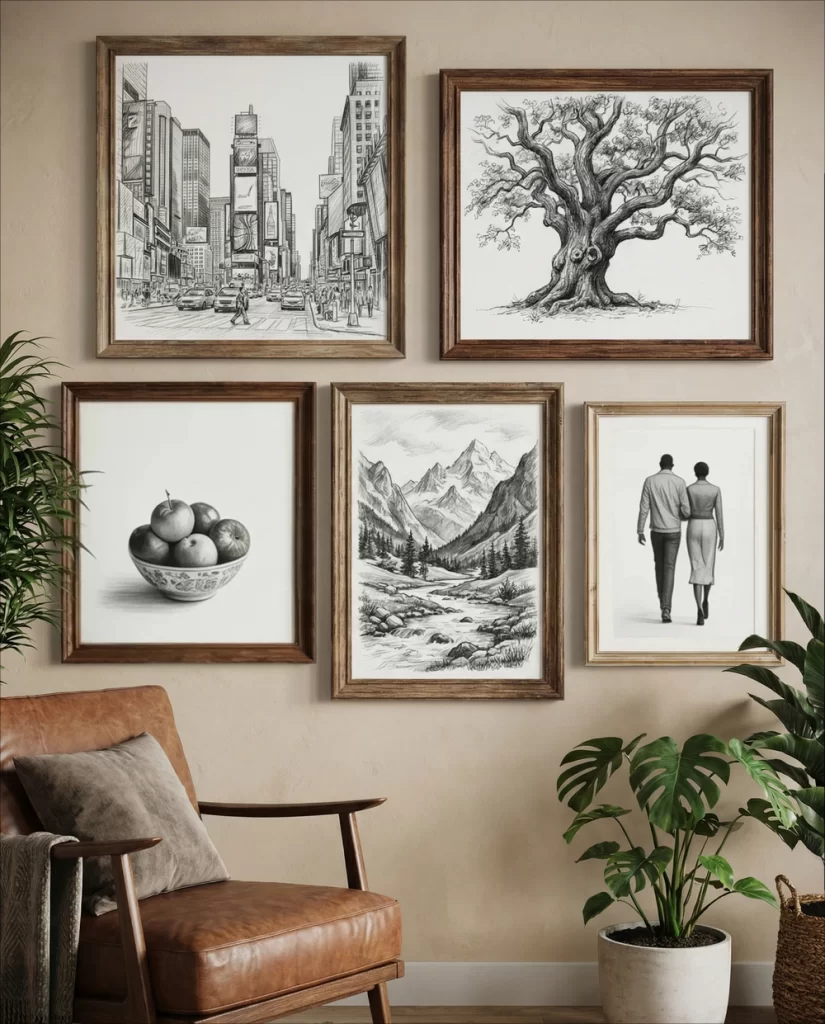
Sometimes the aesthetic ties everything together more than subject or color.
Think about:
- All photography: Mix portrait and landscape shots for variety
- All drawings or illustrations: Creates a cohesive artistic voice
- Abstract prints: Organic shapes and colors that feel contemporary
- Cultural pieces: West African Adinkra symbols, Kuba cloth patterns, Maasai beadwork photography
The goal is making your gallery wall feel like it was assembled by one person with a clear point of view. Which, of course, it is.
You May Also Like: African Wall Decor: 5 Powerful Ways To Energize Your Home
Quick Fix for Mismatched Pieces
Already have artworks that don’t go together? Buy matching frames for all of them. Coordinating frames—whether classic black, natural wood, or vintage gold—pull disparate art into one cohesive gallery wall display.
How to Create Gallery Wall Art That Actually Looks Good
The moment of truth. You’ve got your concept. Now let’s talk execution.
The Paper Mock-Up Method (Absolute Genius)
Before you drill a single hole, create a full-scale mock-up with paper. This hack saves you from drama and regret. I got it from Lonefox and it is absolutely genius.
What you need:
- Large paper rolls
- Pencil, scissors, ruler
- Adhesive tape
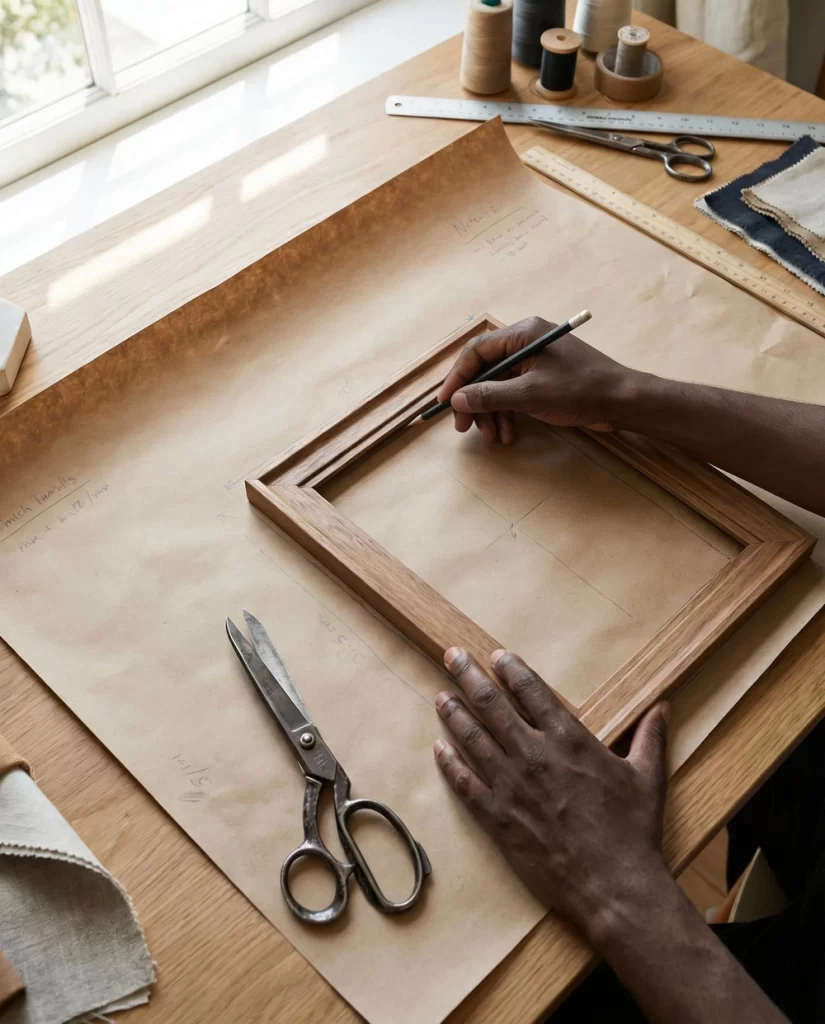
The process:
- If you have frames: Place each frame on paper, trace around it with your pencil, cut it out, and label which frame it represents
- If you’re buying frames: Measure your intended frame sizes with a ruler, cut out paper templates, and label each size
Here’s a time-saver: For multiple frames of the same size, trace your first cutout instead of measuring again. Use that first template to create duplicates quickly.
Once all your paper frames are cut, stick them on your wall with tape. Play with different arrangements until something clicks. Mark drilling spots with your pencil right through the paper.
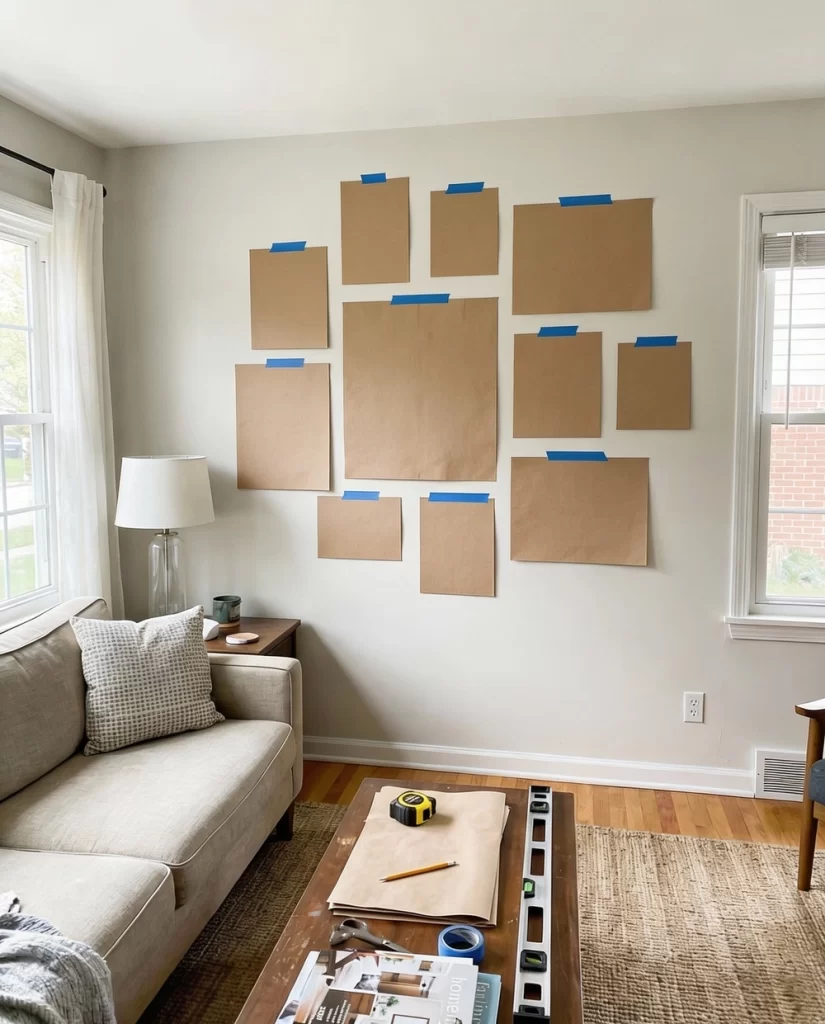
This is absolutely brilliant because you can experiment endlessly before committing. And if you’re using light frames, skip drilling entirely. Use adhesive strips instead.
Gallery Wall Art Layout Ideas
Your layout choices range from perfectly structured to beautifully chaotic. Here are proven options that work.
The Perfect Grid
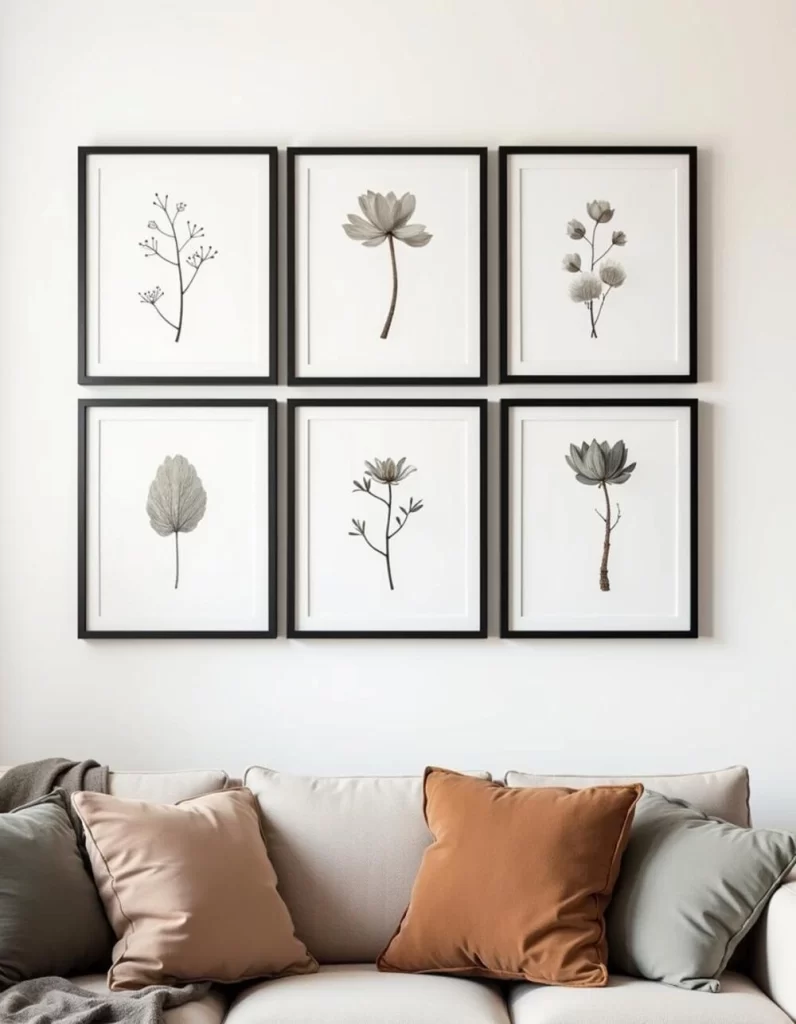
Use four, six, or nine frames in one or two sizes. Align them in precise rows and columns. This layout feels clean, modern, and impossible to mess up.
Best for: People who like order and want something that won’t disrupt their room’s existing style.
The Salon Style
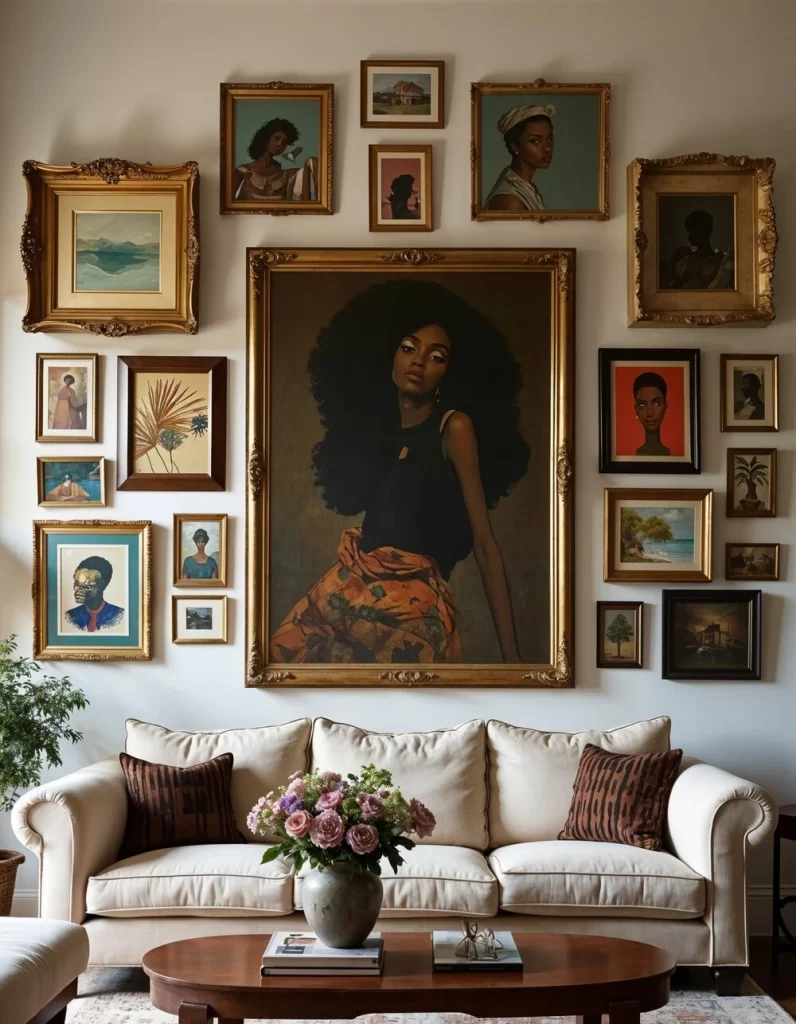
Frames of different sizes arranged organically, starting from a central piece. This layout feels collected over time, like a traditional art salon.
Best for: Maximalists who love visual abundance and aren’t afraid of busy walls.
The Horizontal Row
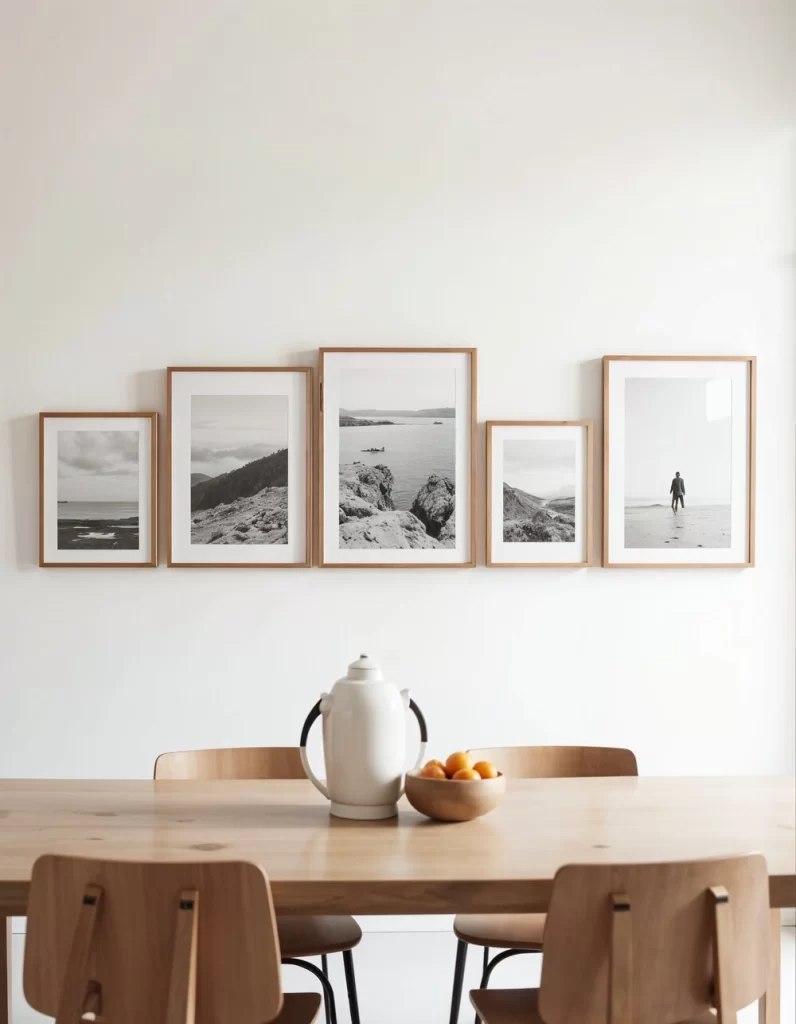
Three to five frames of varying heights aligned along a central horizontal line. Creates a linear gallery feel.
Best for: Hallways, above sofas, or spaces where you want width without too much height.
You May Also Like: Dining Room Wall Design: The Size-Based Guide You Need
The Asymmetric Cluster
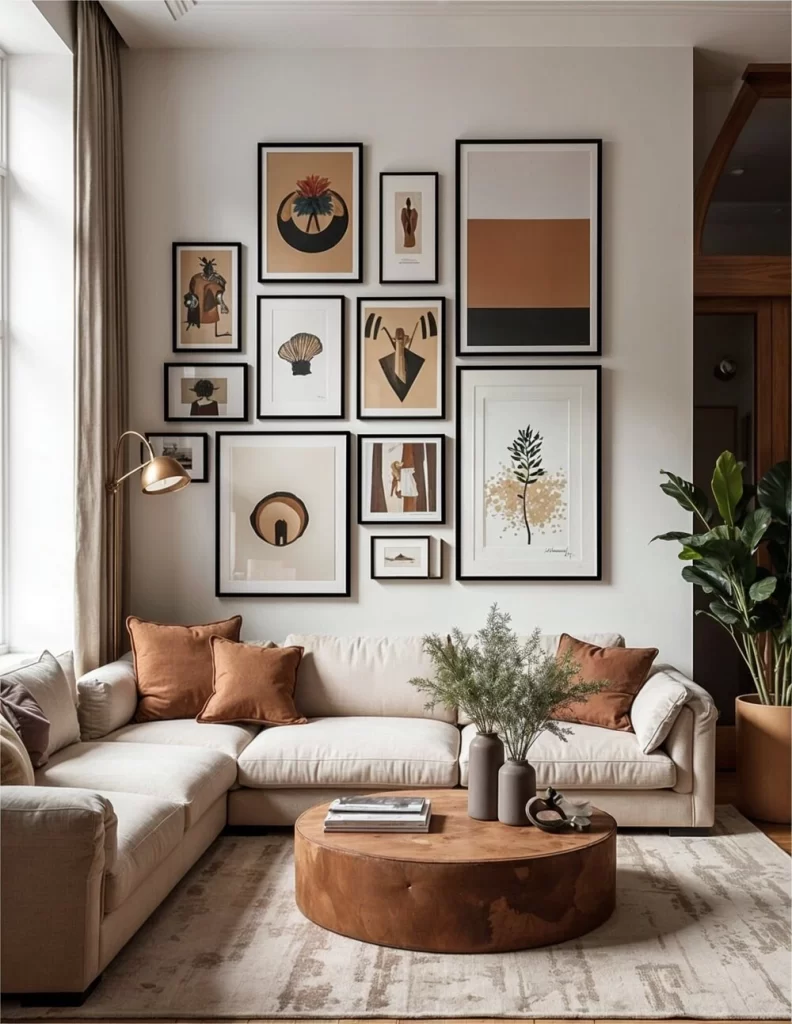
No grid, no perfect alignment. Just a collection of frames arranged to feel balanced even while technically off-center.
Best for: Creative types who trust their eye and want something unique.
Getting the Exact Measurements
Don’t have frames yet and want precision? Use AI to do the math.
Tell your AI assistant: “I want to create [describe your layout style]. My wall measures [width] by [height]. Please suggest frame sizes and spacing that will work.”
Include any constraints: “There’s a sofa against the wall” or “I need to leave space for a sconce.” The more detail you provide, the better the recommendation.
Already have frames? Same approach, but list all your existing frame sizes. Then ask: “Given these frames, what’s the best gallery wall layout for my space?”
Run your paper mock-up to validate the suggestion. Once it looks right on the wall, you’re ready to make it permanent.
Making Your Gallery Wall Art Happen
You’ve planned it. You’ve mocked it up. Now bring it to life.
If you already have frames, this is the easy part. Hang them according to your marked spots. Step back frequently to check alignment.
If you’re starting from scratch, now comes the fun of selecting artwork. This is where your theme, color palette, or style direction becomes your shopping filter.
Finding Affordable Gallery Wall Art
You don’t need gallery prices to create a gallery wall.
- Thrift stores and flea markets: Incredible finds hiding in plain sight
- Online print shops: Affordable reproductions of famous works
- Local artists: Support your community and get unique pieces
- Your own photography: Frame your best shots for truly personal art
- African art markets: Adinkra prints, Kuba cloth reproductions, contemporary West African illustrations
The secret to making affordable art look expensive? Quality framing. A $10 print in a $50 frame looks better than a $100 print in a $10 frame.
Hanging Tips for Perfect Alignment
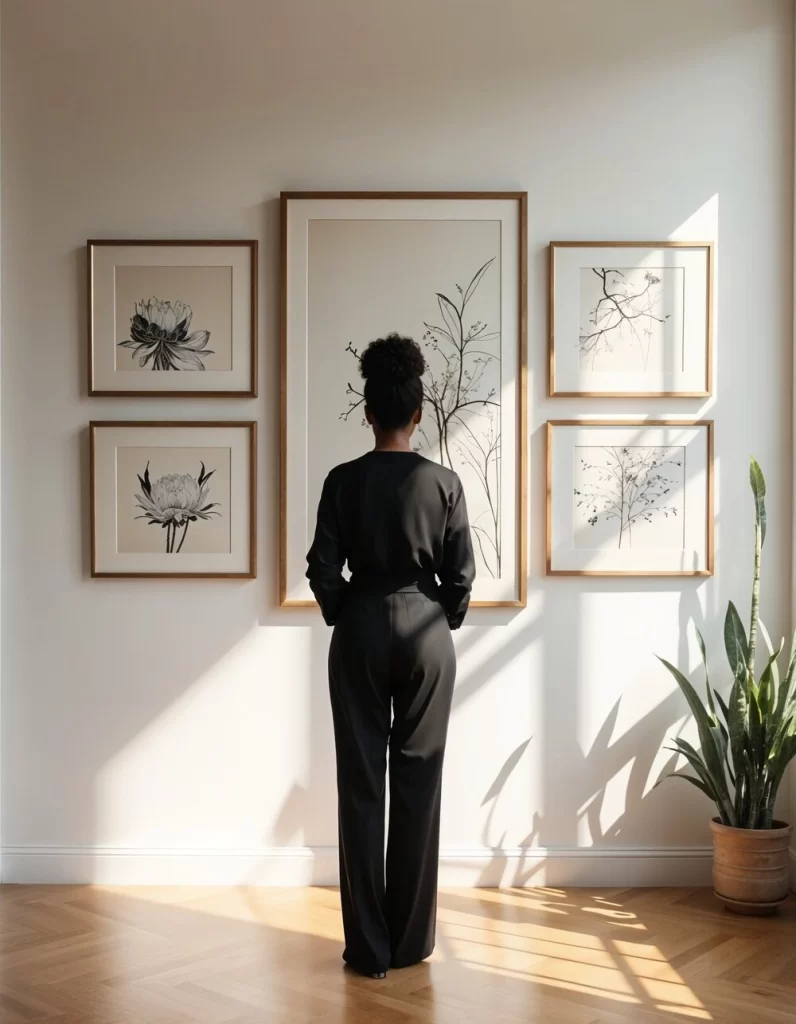
Getting frames level matters more than you think.
Use a level for horizontal and vertical alignment. Your eye will catch even slight angles, and they’ll bug you forever. Measure twice, drill once.
For the center of your gallery wall, aim for eye level—roughly 57-60 inches from the floor to the center of your grouping. This is standard gallery height for good reason.
And please, use proper wall anchors. We cannot have gallery wall art falling at 2 AM.
Your Gallery Wall Art Deserves This Attention
A thoughtfully designed gallery wall transforms your space from unpersonal to curated. It gives blank walls purpose and creates visual interest that single pieces simply can’t match.
So pick your approach, grab your paper and pencil, and start playing with layouts. The perfect gallery wall art display is just a few strokes away.
You May Also Like: 7 African Wall Art Styles You’ll Fall in Love With