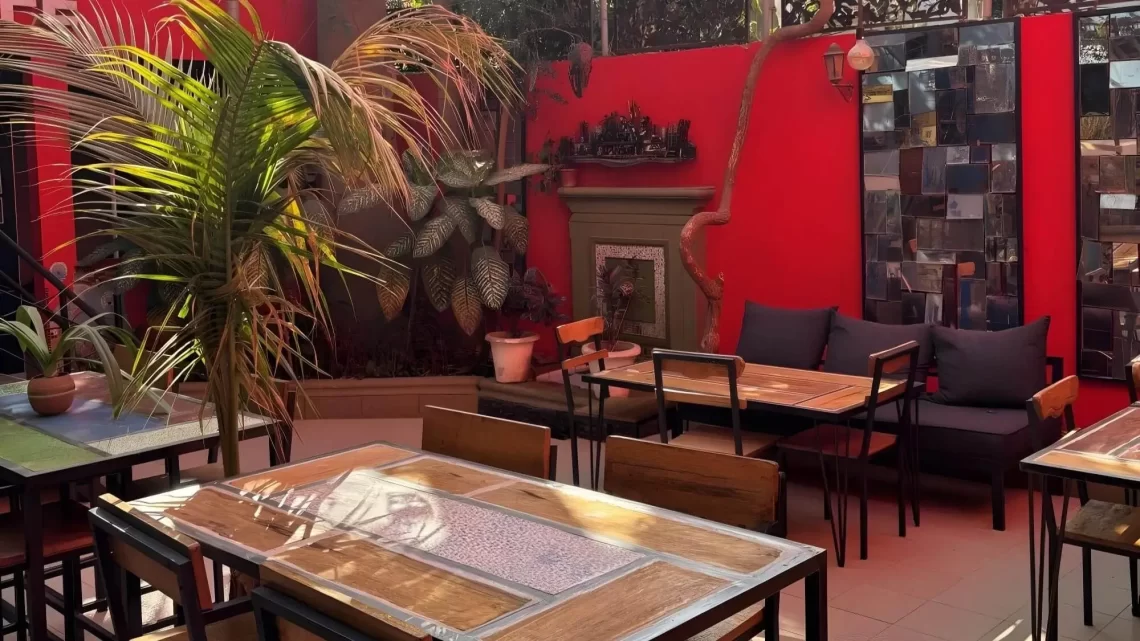
I can’t remember the last time I walked into a space and felt my breath catch, but that’s exactly what happened at Loman Art House in Dakar.
This isn’t your typical art gallery. It’s a living, breathing sanctuary where art spills into every corner, every surface, every moment. A place where exhibitions meet coffee, where sculpture greets you at the door, and where color doesn’t just accent the walls—it completely takes over.
Finding Loman Art: An Unassuming Entry to Something Extraordinary
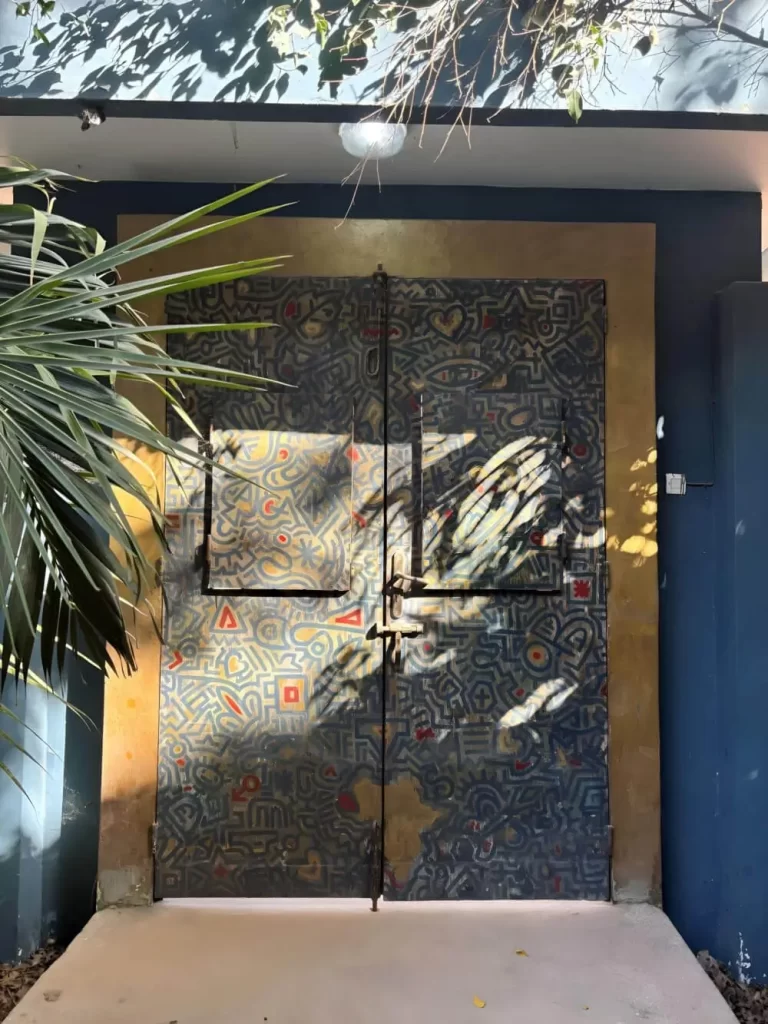
Tucked into the Mamelles district (near the famous Mamelles Lighthouse), Loman Art House doesn’t announce itself with fanfare. From the outside, you might walk right past it. But step through that discreet door, and suddenly you’re somewhere else entirely.
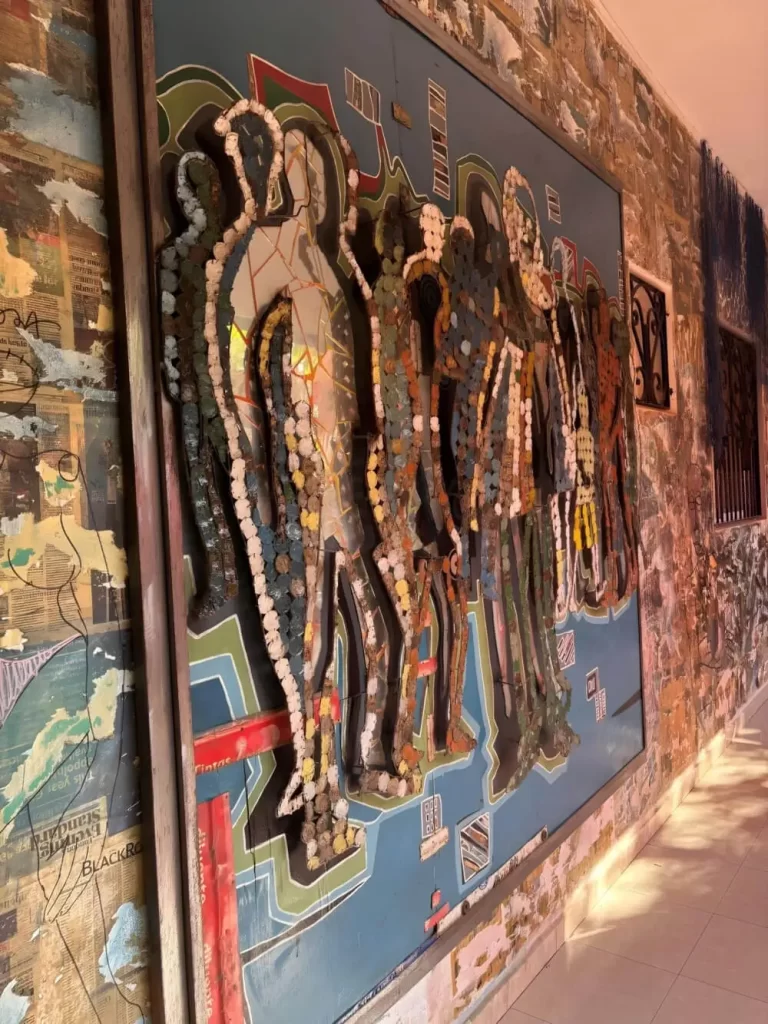
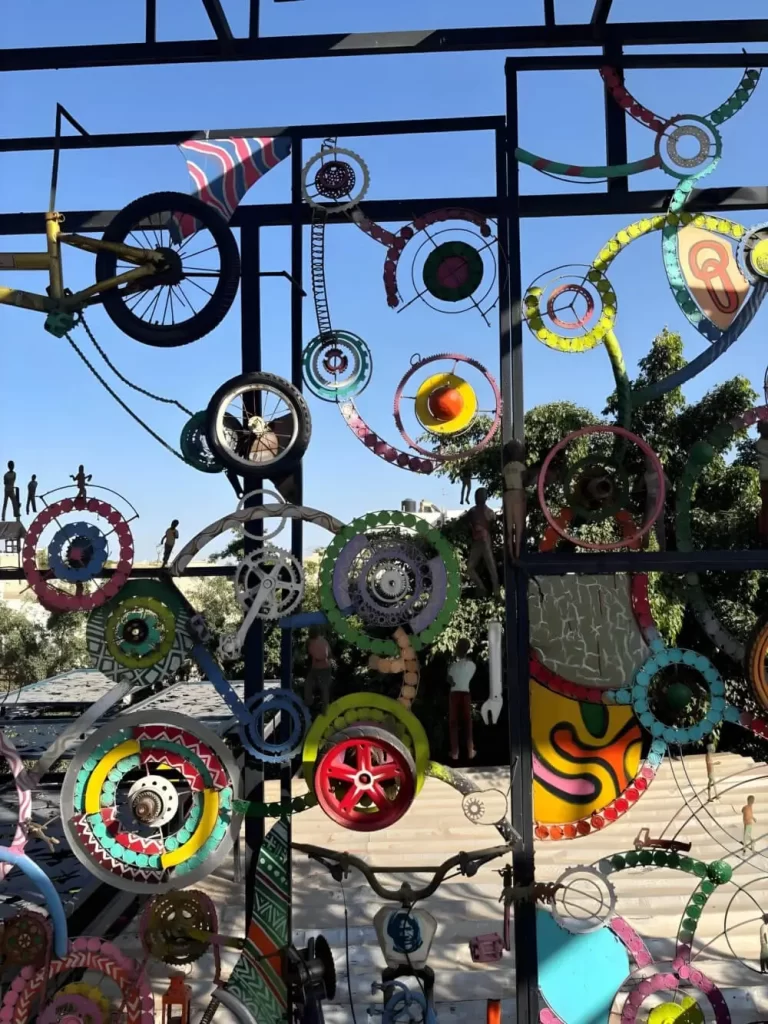
The first thing that hits you? A massive metal artwork standing guard in the entrance. It’s bold, and it sets the tone for everything that follows.
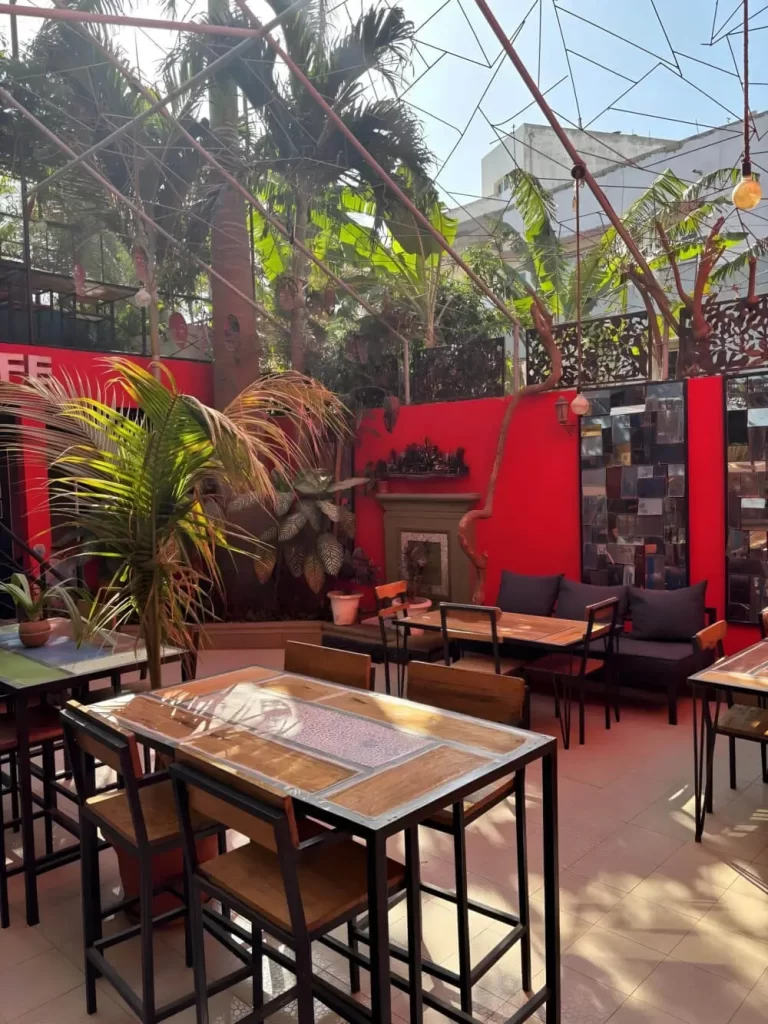
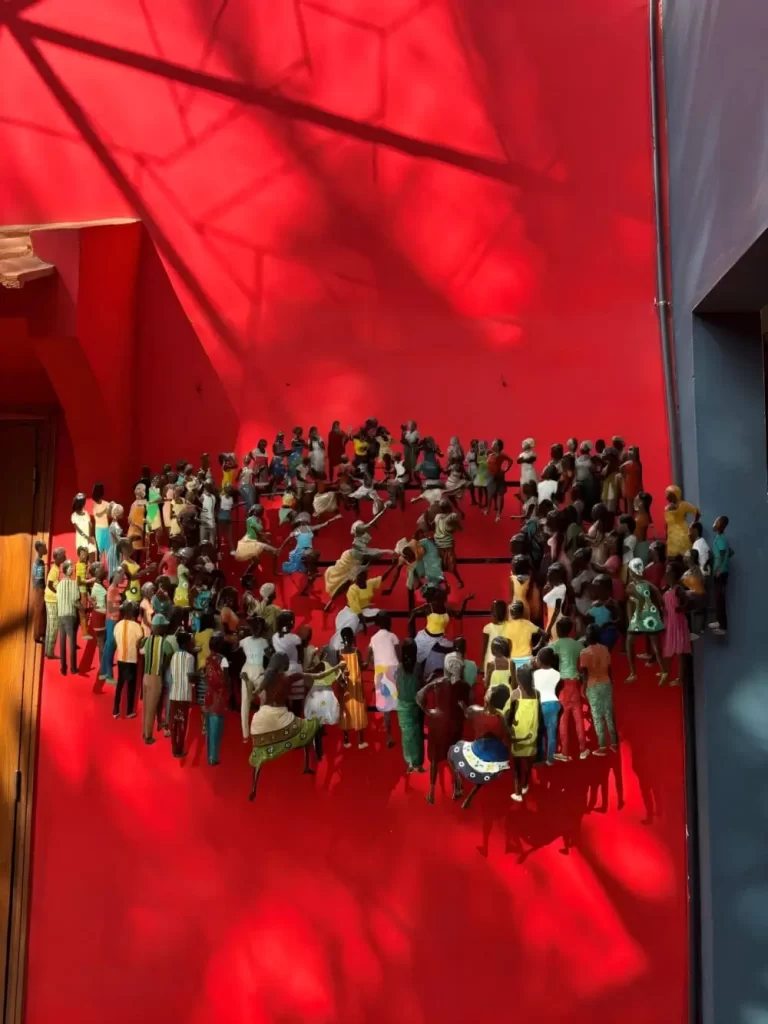
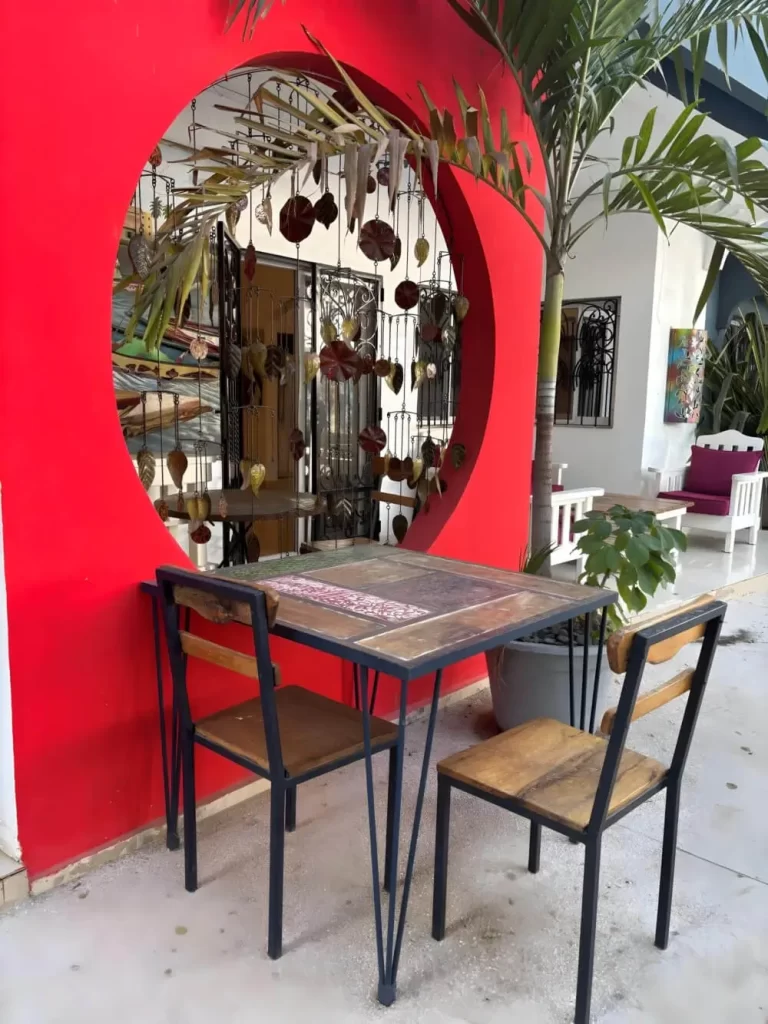
Then comes the red—this vibrant, almost electric red in the café area that makes you feel like you’ve stepped into a living painting.
I’ve visited galleries and cultural spaces across different continents. But I’ve never seen anything quite like this.
More Than a Gallery: It’s a Universe
Loman Art refuses to be just one thing.
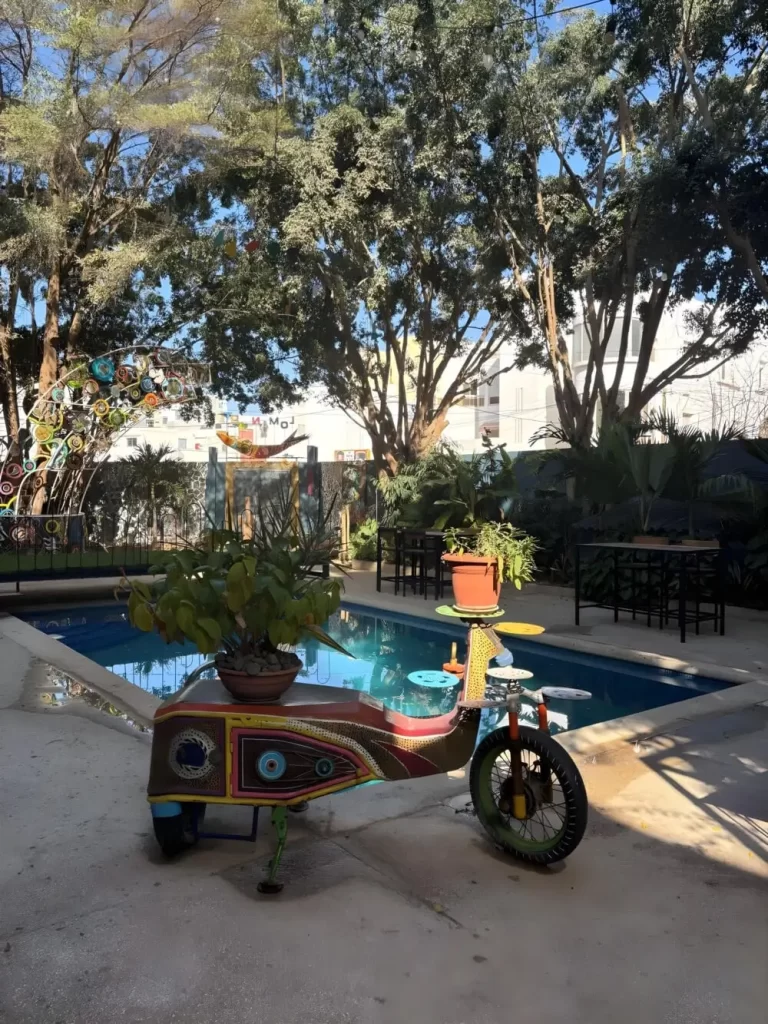
Sure, there’s a gallery space. But there’s also a café, a pool area framed by sculptures and painted details, five guest rooms, and a rooftop that’s plastered with art from floor to ceiling. The place hosts workshops, Pilates classes, brunches, concerts, and exhibitions that rotate throughout the year.
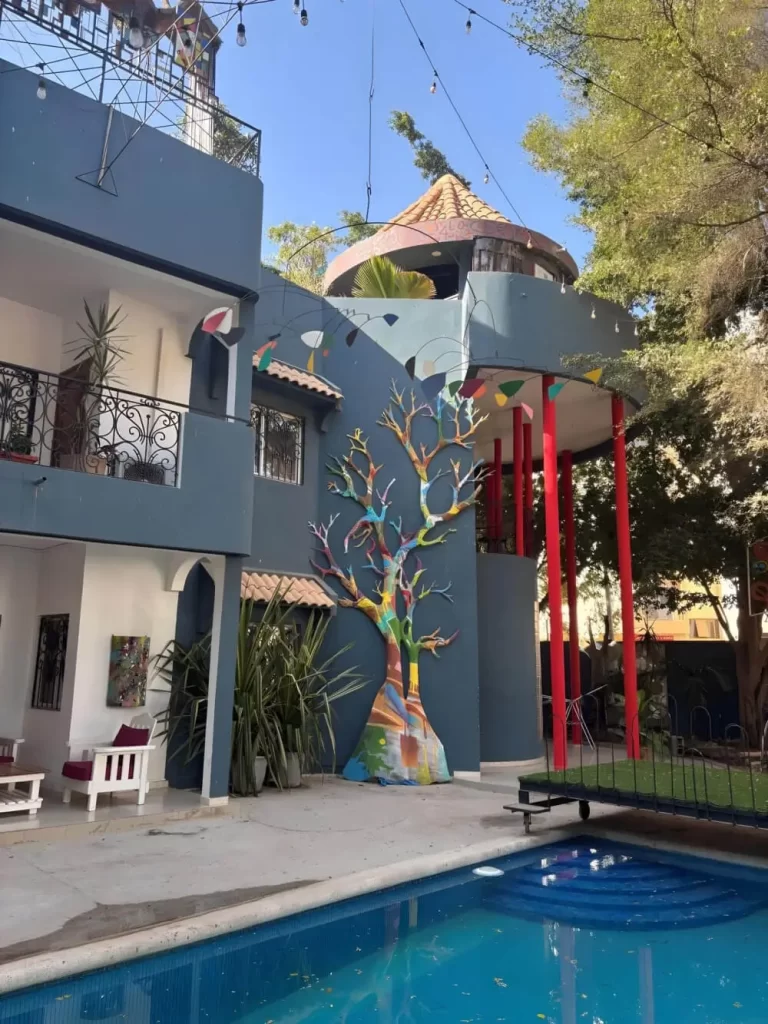
When I visited, the space felt peaceful. Almost meditative. Staff members were quietly working, chatting with the founder. A few other visitors drifted in, moving slowly through the rooms like they were savoring every detail. And there’s so much to savor.
The Art That Surrounds You
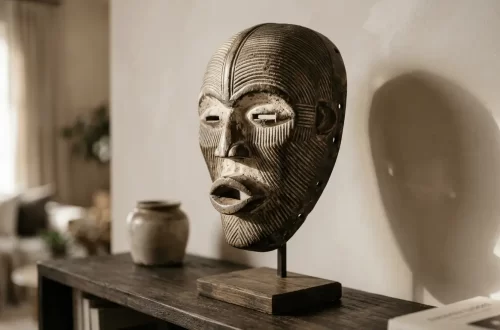
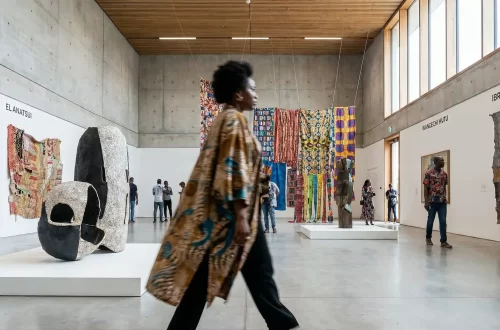
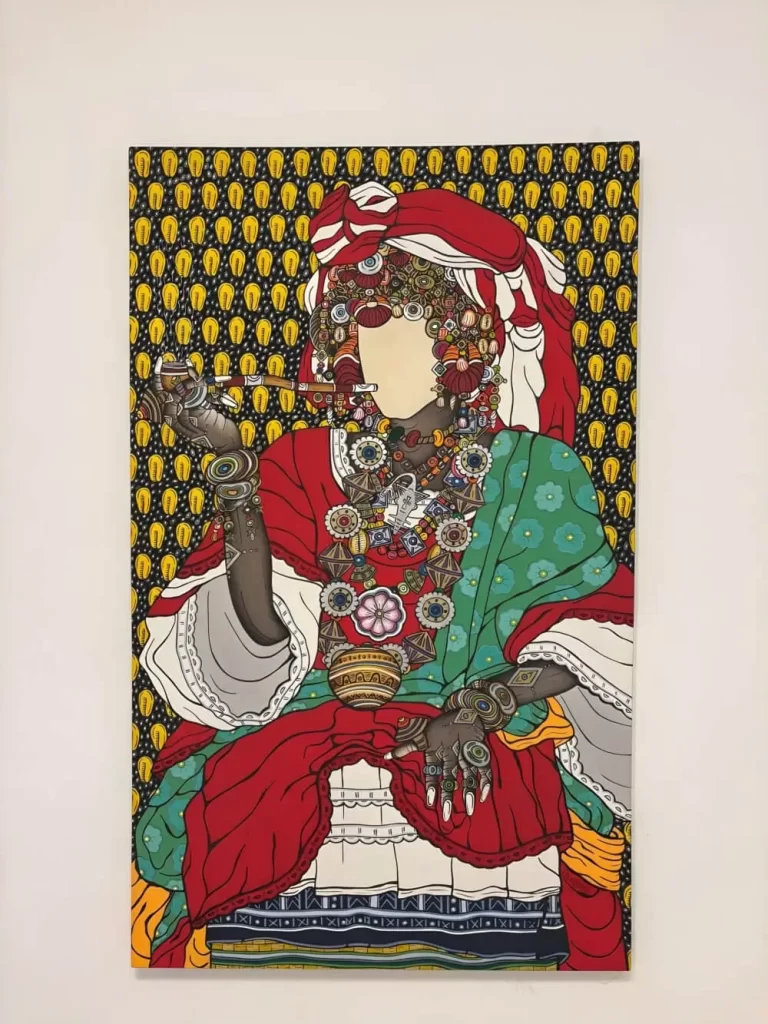
No corner is left untouched. Paintings, sculptures, textiles, mixed media—it’s all here. But it never feels cluttered or overwhelming. Instead, everything seems to flow together naturally.
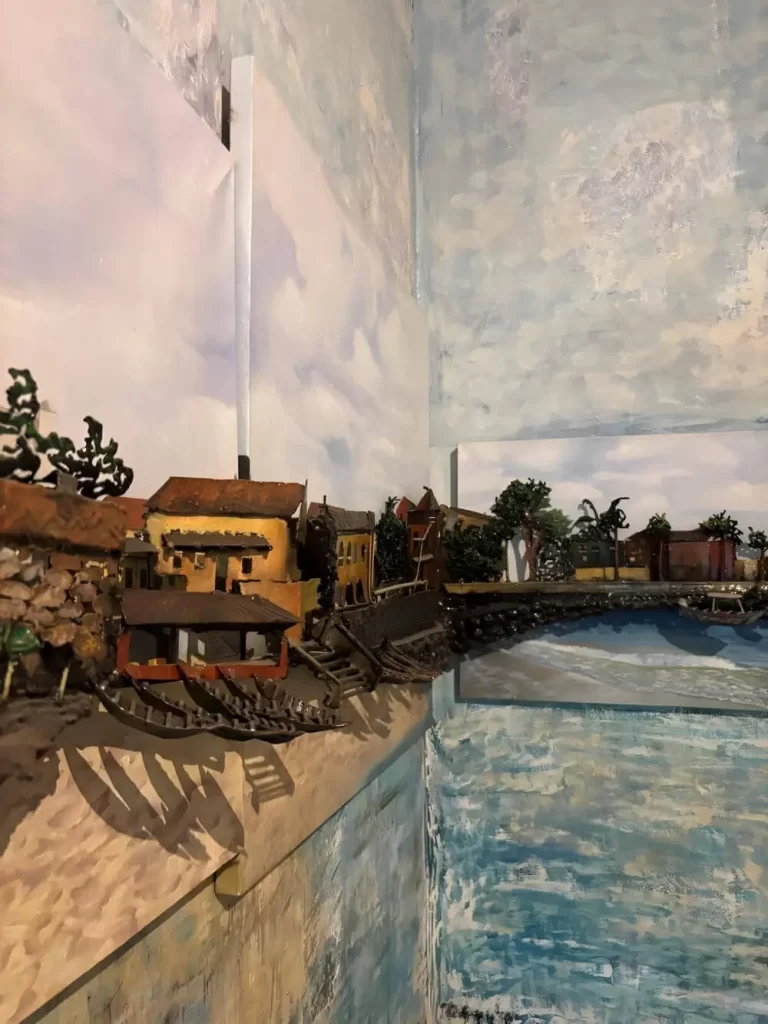
One moment you’re admiring a colorful scooter parked by the pool. The next, you’re studying intricate 3D pieces that depict Dakar’s streets and neighborhoods in a way I’ve genuinely never seen before. And throughout it all, you’re surrounded by the work of contemporary African artists whose names deserve to be known far beyond Senegal.
Artists like:
- Manel Ndoye
- Jackson Shuri
- Debs
- Ibrahima Gningue
The current exhibition when I visited was “Memory of the Coastline,” and I felt fortunate to catch it. These rotating shows mean the space is always evolving, always offering something new.
The Artist Behind It All: Loman Pawlitschek
Let’s talk about the woman who created this sanctuary.
Loman Pawlitschek is an Australian mixed-media artist who moved to Dakar in 2007 and fell completely in love with the city’s warm, vibrant energy. And honestly? You can feel that love in every piece she creates.
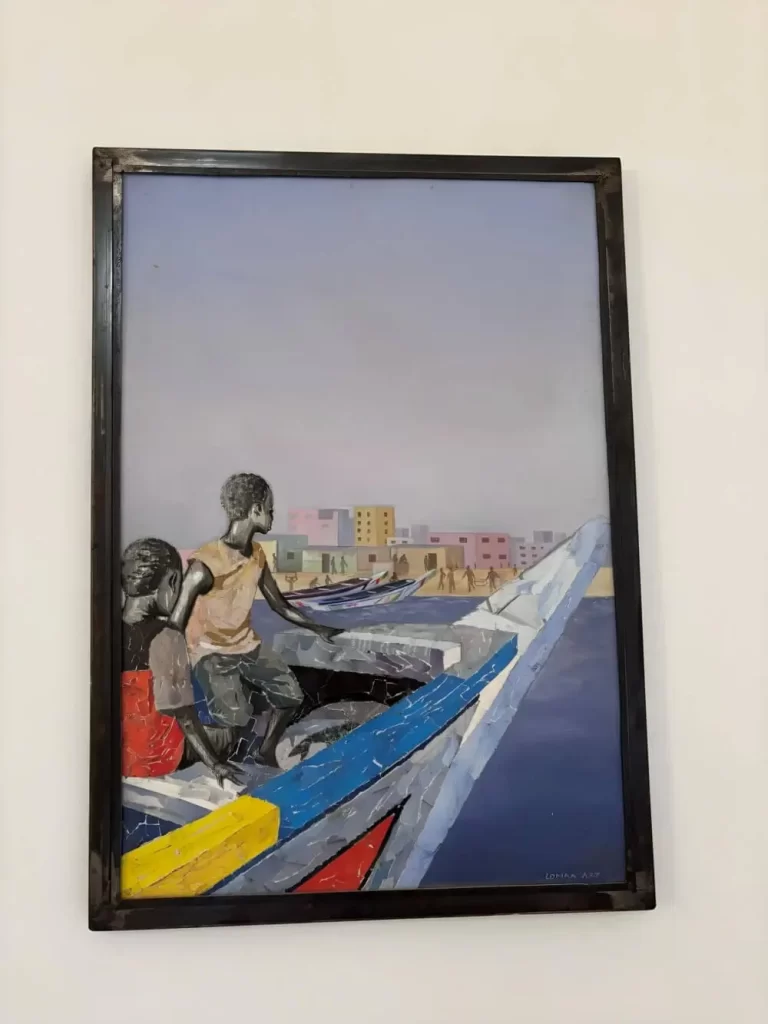
She works across mediums—painting on canvas, transforming broken mirrors and iron into sculptures, building these stunning 3D masterpieces that capture everyday Dakar scenes. Street vendors. Neighborhoods. Mundane moments elevated into something soulful and striking.
While I was there, I had the quiet pleasure of seeing her at work. She was there in the space, working, chatting with staff, surrounded by three rescue dogs who greeted visitors with wagging tails. If I had to describe her in two words? Quiet strength.
A Space That Celebrates Community
What struck me most about Loman Art House is how generous it is. Loman hasn’t hoarded the space for her own work. Instead, she’s opened it up as a true platform for other artists.
Exhibitions like “Female Heroines” and “Celebrations” have animated these walls. They showcase voices that might not otherwise get this kind of spotlight. And that generosity extends to the design side too.
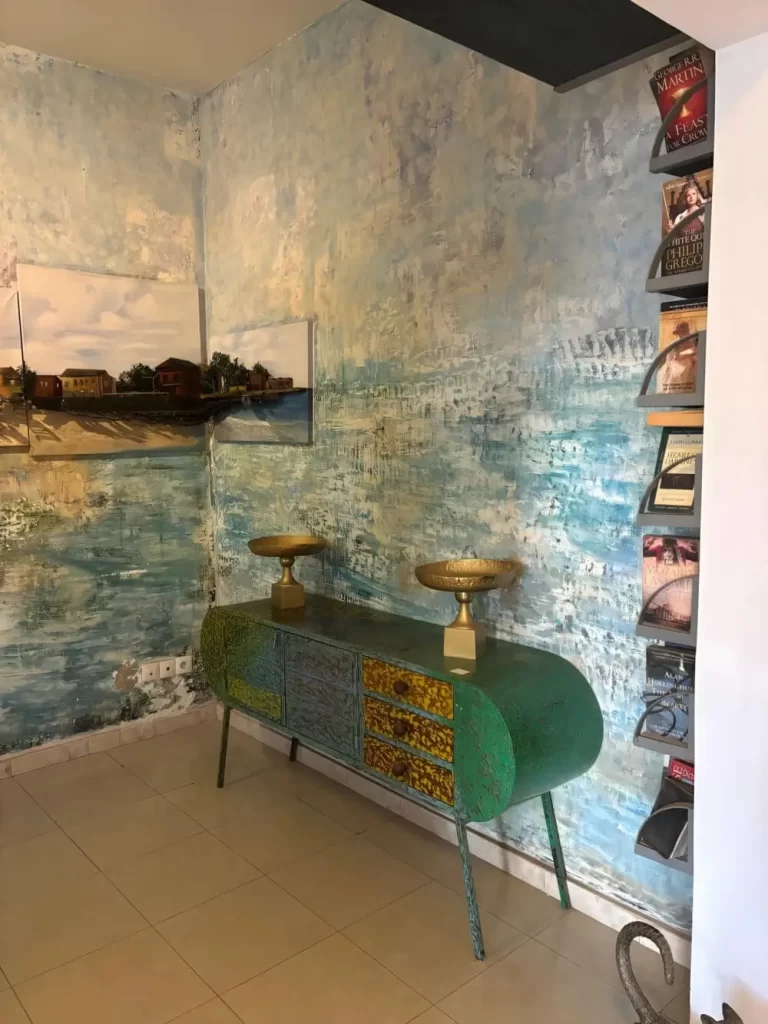
The house creates custom furniture—sofas, coffee tables, cabinets, sideboards—using wood, metalwork, and bold paint. They’re anchored in the identity of the space itself, guaranteed to be conversation starters in any room.
The Rooftop: Art Meets Sky
I’ll be honest—I didn’t spend as much time on the rooftop as I would have liked. (Blame a looming flight.) But even a quick visit showed me this: the rooftop isn’t an afterthought.
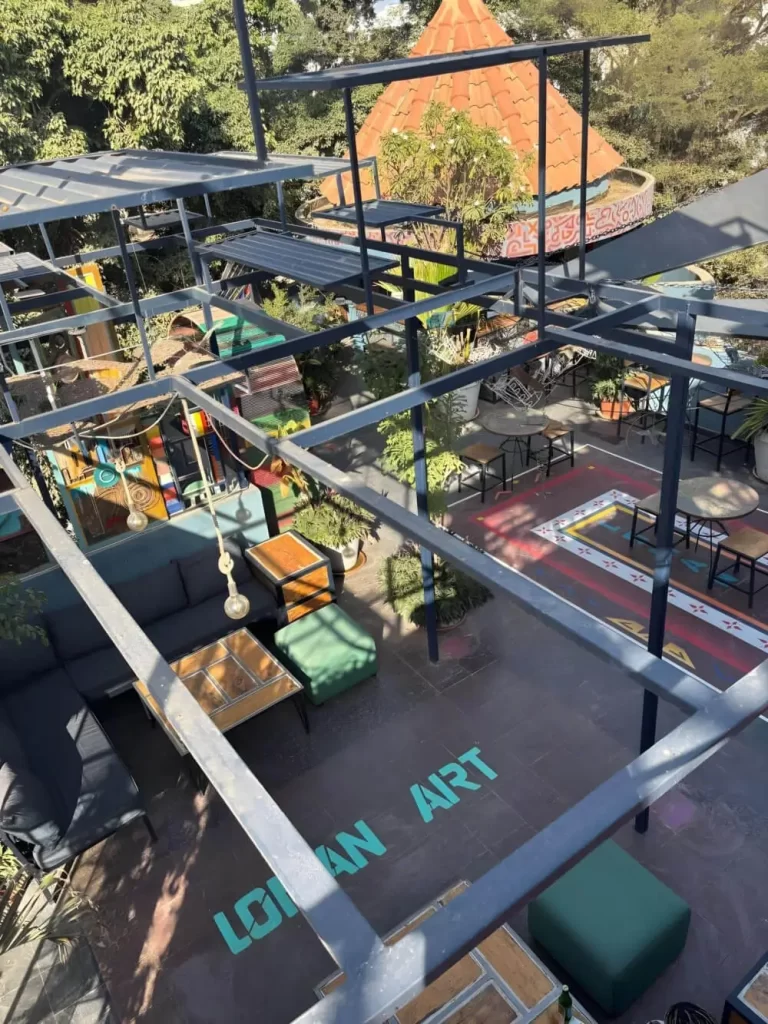
It hosts events, workshops, and seating areas. And true to form, every inch is covered in art. Floors, walls, structural elements—all of it becomes a canvas. It’s the kind of space where you’d want to spend an entire afternoon, coffee in hand, letting creativity wash over you.
Practical Details: What You Need to Know
Location: Mamelles district, near the Mamelles Lighthouse. Just search “Loman Art House” in Google Maps and you’ll find it easily.
Cost: Completely free to visit. Just show up.
Hours: Open daily (though I’d recommend checking their social media or website for any special events or closures).
How long should you plan to stay? I was there for less than an hour because of travel constraints, and I desperately wanted more time. If you can, plan to linger. Grab a coffee, sink into one of those art-covered corners, and take it all in. This isn’t a place to rush through.
Why Loman Art Matters
In a world where so many galleries feel sterile or intimidating, Loman Art House feels alive. It’s approachable without sacrificing sophistication. It’s seamlessly colorful. It’s deeply rooted in Dakar’s creative community while also welcoming curious visitors from anywhere.
And perhaps most importantly, it’s free. That accessibility matters: art shouldn’t be locked behind expensive tickets or exclusive memberships. Because creativity thrives when it’s shared.
Final Thoughts: Go. Just Go.
If you find yourself in Dakar, visiting Loman Art House is essential.
Bring your camera (you’ll want to document this). Bring your curiosity. Bring an open afternoon if you can manage it. And most of all, bring your willingness to be surprised.
Because even if you think you’ve seen stunning art spaces before, you haven’t seen anything quite like this. I certainly hadn’t.
And now that I have? I’m already planning my next visit.