
You know that feeling when you discover something so beautiful you become obsessed for a little while? That was African indigo fabric for me. This centuries-old craft has been perfected in West Africa for over 700 years. And honestly? It deserves a wide comeback.
The thing is, African indigo is facing serious threats. Fast fashion has taken over. Synthetic dyes are easier and cheaper. The elders who hold this sacred knowledge are aging. Climate change is messing with the plants that create these stunning blues. It’s a lot working against this gorgeous tradition.
But here’s my pitch: we can help preserve this craft by bringing African indigo fabric into our homes. Not tucked away in closets. Not saved for special occasions. Right there in your everyday spaces where you’ll see it, appreciate it, and actually use it.
Jump to:
The Ancient Art Behind African Indigo Fabric
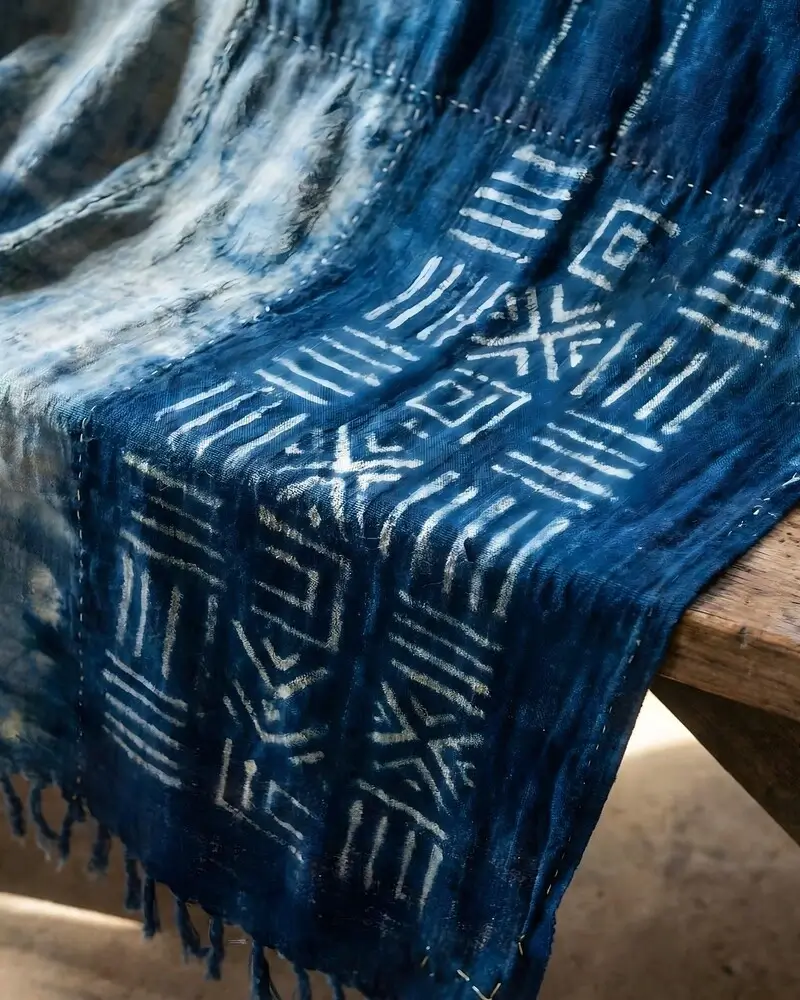
African indigo comes from West African plants such as indigofera. These grow throughout Mali, Guinea, Ivory Coast, Senegal, and Nigeria. For millennia, this indigo was coveted in world markets. People traveled incredible distances just to get their hands on it.
The process itself? An art form. Plain and simple.
Creating African Indigo Fabric Takes Serious Time
From plant to finished fabric takes at least a week. Sometimes longer. The makers aren’t rushing this craft.
Here’s what goes into it:
- Collecting the indigo plants
- Extracting the dye and creating the dyeing solution
- Submerging cloth for two to three days
- Letting it dry for at least one day
- Creating those intricate patterns West Africa is known for
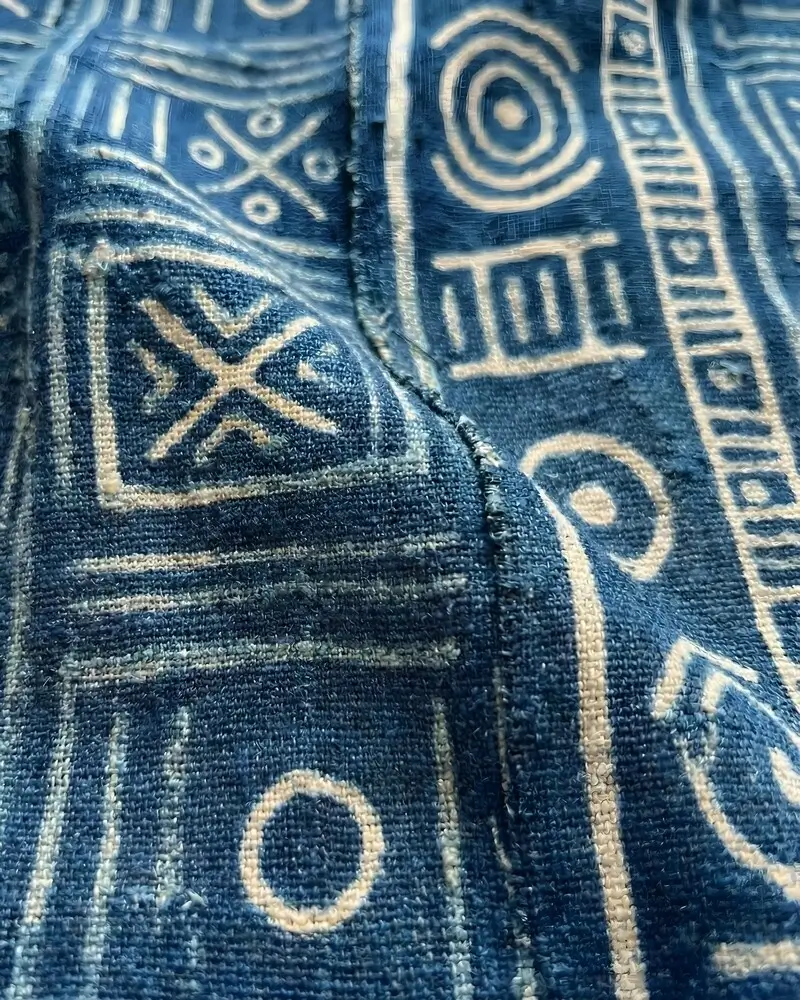
That last part deserves extra attention. The patterns on African indigo fabric don’t just happen. Makers fold the cloth and tie it with objects that create different designs during dyeing. Or they stitch it with raffia for even more pattern variety.
Stitch-resist fabrics became especially popular in Mali. The Mandinka groups of southern Mali, eastern Guinea, and northern Ivory Coast got famous for producing highly detailed cloths. The attention to detail is genuinely exquisite.
You May Also Like: How to Style Iconic Mud Cloth in a Modern Home
Famous African Indigo Fabric Traditions
Not all African indigo fabric looks the same. Different regions developed their own signature styles over centuries.
Adire Cloth from Nigeria
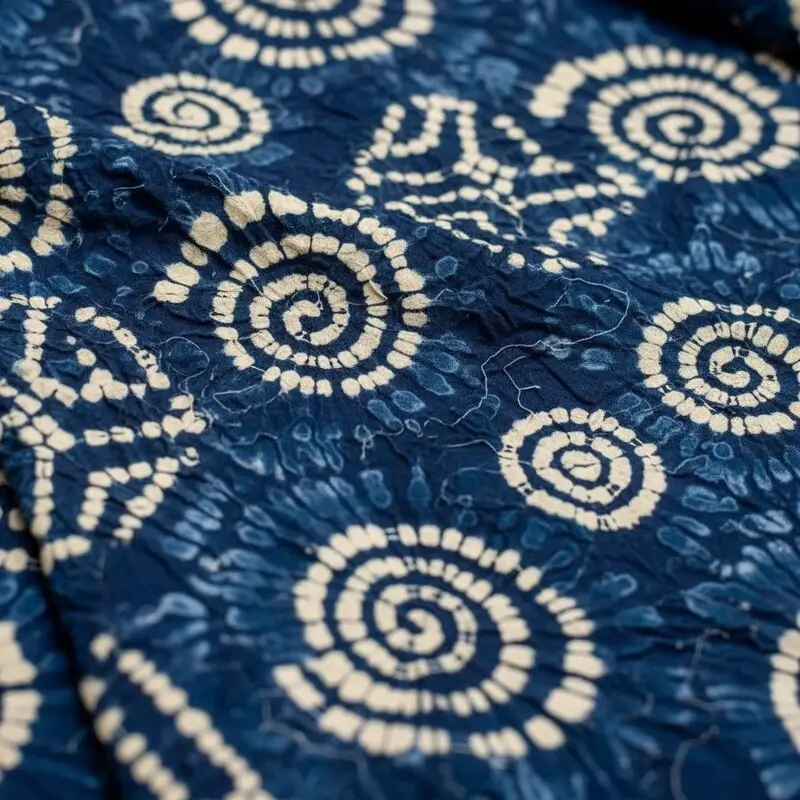
Adire cloth comes from the Yoruba people of Nigeria. It’s probably the most well-known West African indigo textile. The complex, intricate patterns made it rise to fame. And rightfully so—these designs are absolutely stunning.
Leppi from Guinea
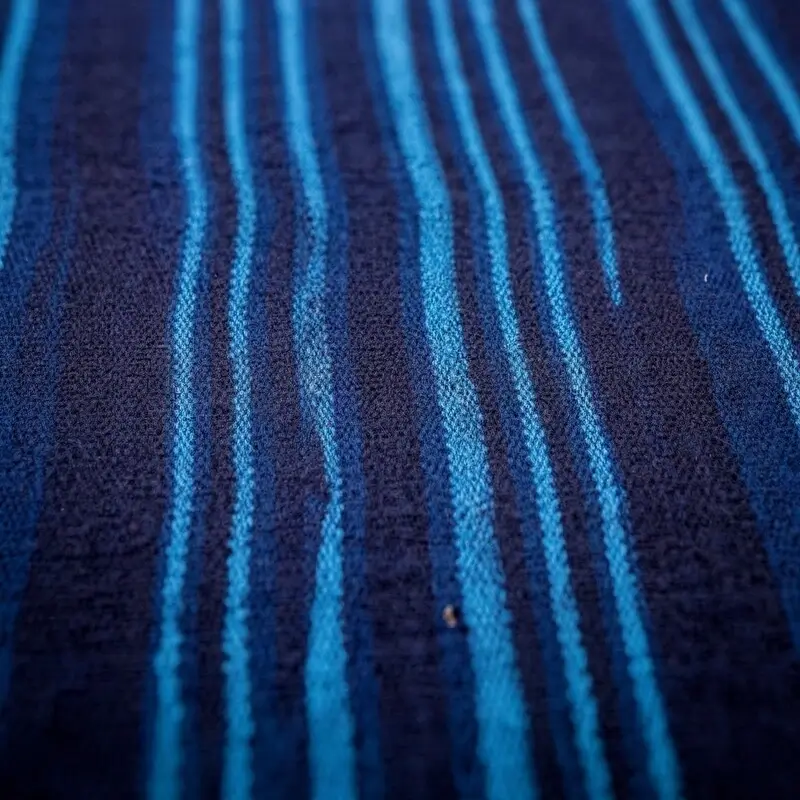
This is the specific name for hand-woven, deep indigo fabric from the Fouta-Djallon region in Middle Guinea. It often features fine light stripes running through that rich blue. For the Fulani ethnic group, leppi holds serious cultural importance.
The Blue Men of the Desert

The Tuareg people—known as “the blue men of the desert”—have traveled miles across the Sahara’s dunes for years. All to buy this renowned African indigo fabric. When a craft inspires that kind of devotion, you know it’s special.
Why Your Home Needs African Indigo Fabric
Look, I get it. You might be thinking, “But I don’t wear traditional garments.” Fair point. Here’s the beautiful thing: you don’t need to.
African indigo is still worn for special occasions within some West African communities. But those appearances are getting rarer. So instead of waiting for the perfect ceremonial moment, let’s bring this regal fabric into full force through your home.
The Case for African Indigo Fabric as Decor
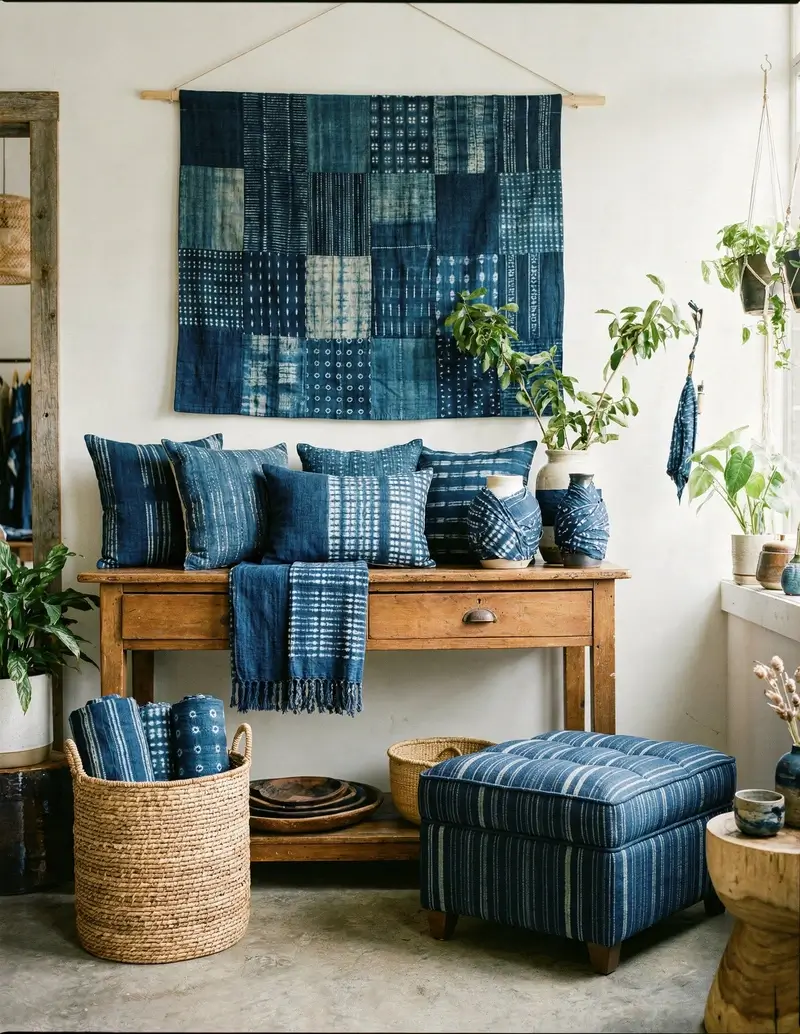
When you use African indigo fabric in your home, you see it every day. Not shoved in a closet. Not waiting for some vague future occasion. Right there, grounding your space with beauty.
Plus, this fabric is built to last. We’re talking about textiles that have survived centuries as a craft. The quality stands up.
That deep blue color brings instant calm. The sophisticated patterns add a luxe feel without trying too hard. All in all, It just makes spaces look more considered and intentional.
You May Also Like: The 3 Pillars that Make West African Interior Design Unique
How to Style African Indigo Fabric in Your Home
Ready to bring African indigo fabric into your space? Here are my favorite ways to use it.
Upholstered Ottoman with African Indigo Fabric
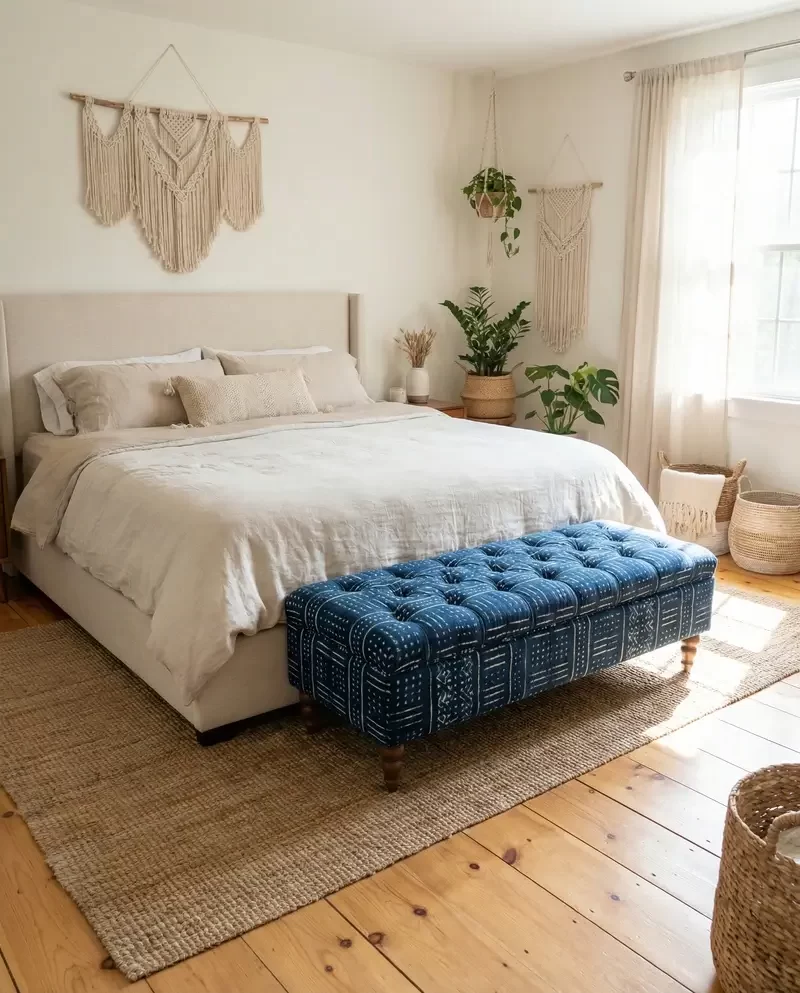
One of my favorite applications: an ottoman upholstered in African indigo fabric is chef’s kiss perfection.
Ottomans are already inherently chic. Add that deep blue and those intricate patterns? You’ve elevated your bedroom or living room instantly.
Place it at the foot of your bed. Next to an accent chair. Wherever you put it, that’s exactly what the space was missing. The sophisticated patterns make it look oh so luxe without any extra effort.
You May Also Like: A Spectacular Afro Bohemian Bedroom Decor in 7 Styles
African Indigo Fabric on Chair Backs
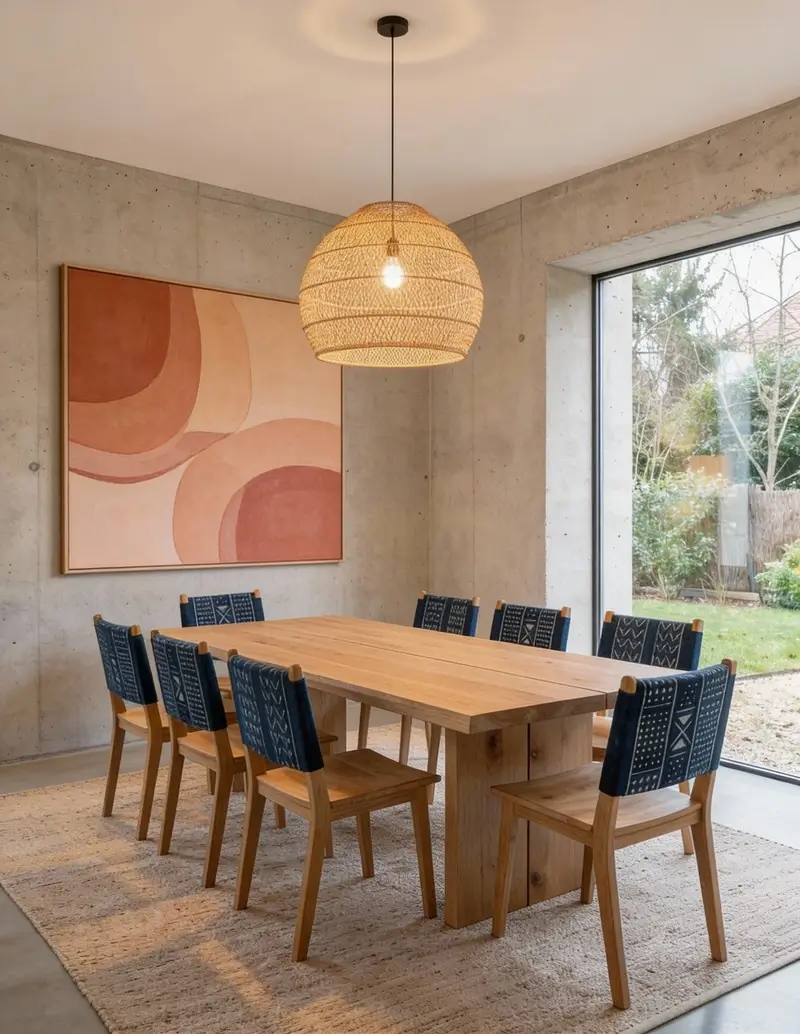
I got this idea from watching Lilly Bekele-Piper’s Nairobi home tour. She brought African indigo fabric back from Senegal. Then a Kenyan artisan upholstered the backs of her dining chairs with it.
The image stuck with me immediately. It was such a smart use of the fabric. Unexpected but absolutely gorgeous. And yes, the fact that the fabric came from my country made me love it even more.
You May Also Like: 3 Contemporary African Dining Room Styles to Steal Right Now
Draped on a Bed
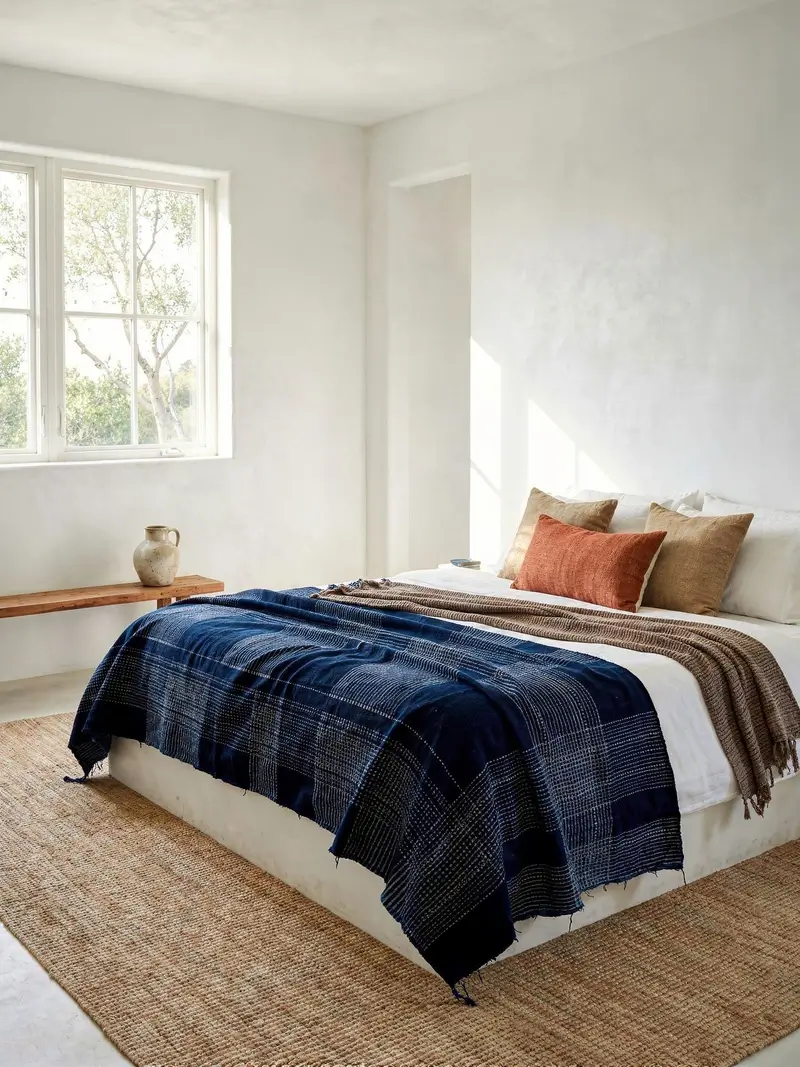
An African indigo fabric runner looks stunning draped at the foot of a bed. You can use it alone for a clean look. Or layer it over chunkier soft fabrics for added texture and luxury.
Either way, it grounds your bedroom beautifully. Creates calm without being boring.
You May Also Like: An Expert 7-Step Guide to Elegant African Bedroom Decor
Throw Pillow Covers in African Indigo Fabric

This one’s more classic, but still worth mentioning. African indigo fabric makes absolutely delightful pillow covers. Always has, always will.
I personally love an indigo lumbar pillow on a reading nook chair. But they look just as gorgeous on beds and sofas.
The patterns add visual interest. The deep blue brings serenity. Win-win.
You May Also Like: How to Style Pillows on a Couch | 21 Fresh & Easy Looks
Overlay Topper Mattresses

Brands like Tensira have taken African indigo fabric to the next level. They produce gorgeous throw pillows, yes. But they also create beautiful topper mattresses and more.
I love how they showcase the fabric in all shapes and forms. No limitations. Just pure appreciation for the craft.
These topper mattresses can go over a bench. A chaise longue. A cane chair. Even your bed for extra padded comfort. The versatility is genuinely impressive.
You May Also Like: How to Use African Print Textiles for an Exciting Home
African Indigo Fabric Deserves This Revival
This centuries-old craft faces real challenges. But we can help keep it alive by bringing African indigo fabric into our modern homes.
You get stunning decor that brings calm, sophistication, and cultural richness to your space. The craft gets the visibility and appreciation it deserves. Everyone wins.
So pick your favorite application. Find authentic African indigo fabric from artisans who still practice this traditional craft. And give this gorgeous textile the daily showcase it’s earned over 700 years of perfection.