There’s this moment that happens every time you walk into a really beautiful hotel or a friend’s home that just has it together. You don’t even know what makes it feel so nice at first. But then you realize. It’s the scent.
Good scent is one of those things that works on you before you’ve had a chance to think about it. You don’t notice the absence of it. But when it’s there and it’s right, something hits different. The space feels elevated, sophisticated.
Across the African continent, home fragrance has never been an afterthought. It’s an art form. A gesture of hospitality. And in 2026, social media is finally catching up with a trend called scent stacking that, frankly, our grandmothers had figured out long before it had a name.
Scent Traditions in African Homes
African homes were layered in fragrance long before reed diffusers existed.
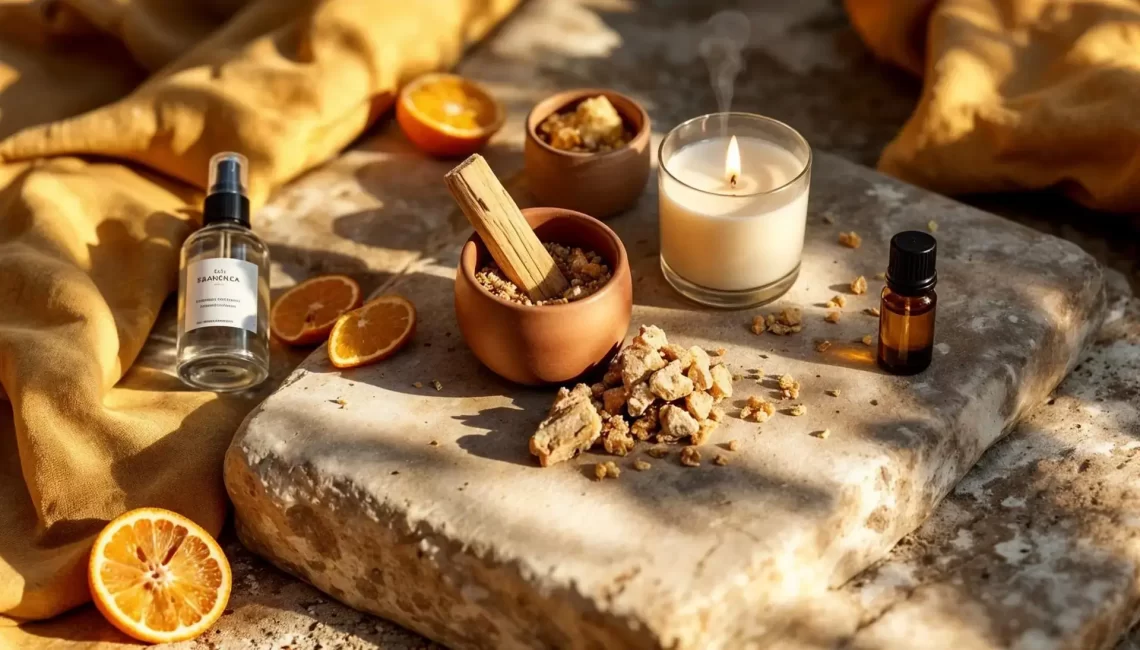
In Senegal, Mali, and Guinea, women create their own Thiouraye — a handcrafted blend of agarwood shavings, and fragrant oils burned over hot charcoal. It’s not a product you buy. It’s a recipe, passed from mother to daughter, sometimes guarded like a family secret. You burn it when guests arrive. You burn it to mark a moment. The scent fills the room, clings to the curtains, and lingers long after everyone has gone home.

In Somalia, Ethiopia, and Eritrea, Frankincense and Myrrh do similar work. Frankincense is burned during the Ethiopian coffee ceremony — as the room becomes social. The Somali equivalent, Uunsi, is a blend used to scent both the home and the clothing of its inhabitants.
In Morocco and Tunisia, orange blossom water and rose water are sprinkled on floors or left in open bowls to slowly perfume the air — a softer, more ephemeral approach that layers beautifully with heavier resins in the same home.

Different methods, different cultures, one shared philosophy: scent is a design material.
Scent stacking, as the fragrance world is now calling it, is simply the modern articulation of something Africa has always practiced.
So What Is Scent Stacking, Exactly?
The idea is simple. Instead of a single candle doing all the heavy lifting, you layer different scent mediums — a diffuser, a candle, a room spray — to create a “3D fragrance.” One that has depth, evolves throughout the day, and changes how a space feels.
Think of it like an outfit. A strong base that works with everything. A middle layer that carries your personal style. A finishing accessory that changes depending on your mood. Scent stacking your home works exactly the same way.
The Three Layers
Layer 1 — The Anchor (Your Diffuser)

This is your home’s olfactory foundation. It runs in the background, setting the mood without demanding attention.
Controversial opinion: reed diffusers are a waste of potential. They sit there looking beautiful and doing very little. What actually works for me is a rechargeable aroma diffuser — one that actively disperses essential oil into the air, cycling on and off according to your settings. Fill it with a single clean note (more on that shortly), and you get the hotel lobby experience without the hotel lobby price tag.
Good anchor scents: White Musk, Light Oud, Sandalwood, Frankincense. These are the Thiouraye of the modern home — grounding, warm, and present at all times.
Layer 2 — The Moment (Your Candle)

Candles are for occasions. Not big occasions — ordinary ones. The Sunday afternoon with a book. The face mask. The bath. The dinner that deserves better than overhead lighting.
The act of lighting a candle is itself a signal: this moment is worth something. It draws a line between the chaos of the week and this specific hour of peace. Which is, by the way, exactly what burning incense before an Ethiopian coffee ceremony is doing. The ritual is the point.
Layer 3 — The Accent (Your Room Spray)

Room sprays are fast, targeted, and high-impact. They’re not meant to replace the other two layers — they’re meant to punctuate them. Use them:
- As a finishing touch after cleaning
- 30 minutes before guests arrive (not right before — you want it to settle)
- In the morning to reset your energy
- In the evening to physically signal to your brain that the day is over
You don’t need all three layers to start. One is already better than nothing. Two is a noticeable upgrade. Three is being fully in control of your home’s atmosphere — and that is a beautiful thing to see.
Scent Pairings That Work
This is where it gets interesting. Oud, Frankincense, Jasmine, Orange Blossom, Myrrh: these are not “niche” or “exotic” notes. They are some of the oldest and most sophisticated fragrance materials in the world. They also happen to layer beautifully.
Morning vs. Evening
Just like you wouldn’t wear your evening perfume to a 9am meeting, your home’s scent should shift throughout the day.
Morning — The Wake-Up Stack. Light, bright, and moving fast. The goal is to open the senses.

- Spray: Mint + Green Tea — sharp and clean. Pairs great with White Musk or Sandalwood in your diffuser.
- Skip the candle in the morning unless you’re having a slow weekend.
Evening — The Wind-Down Stack. These are the “slow” fragrance molecules. They don’t dissipate quickly, they stay, which is exactly the point.

- Candle: Amber + Vanilla — rich without being too sweet.
- Spray: Rose + Sandalwood on your bedroom curtains, 20 minutes before sleep.
These both pair great with Frankincense or Light Oud in your diffuser to ground your evening.
Summer vs. Winter
Summer calls for the Moroccan approach: light, aquatic, floral. Orange Blossom, Jasmine, Neroli, and fresh Mint feel at home in warm air and open windows. Keep your diffuser on a lighter setting and let the natural heat do half the work.
Winter is Thiouraye season. This is when you lean into Agarwood, Myrrh, Oud, and Bakhoor-style blends — dark, warm, and enveloping. A candle burning in the corner, heavy curtains holding the scent, and a Frankincense diffuser running in the background? That is a room that feels like a destination.
Zonal Scenting: A Room-by-Room Guide
Now this is not for everybody. You have to be an absolute scent addict.
Once you have your layering logic down, the next level is thinking about your home as a series of scent zones. Each gets its own olfactory identity, the way each room has its own mood and color palette.
The Entryway: First Impression, Every Time

Your entryway is where the scent greets someone before they’ve even said hello.
Keep your anchor diffuser here, running consistently. Add a Citrus or Orange Blossom spray on the console table and use it about 30 to 60 minutes before guests arrive — not right before, so it has time to settle into the air. The goal is for it to feel effortless, as if it was always there.
The Living Room: Match the Scent to the Textures

Here’s a concept worth stealing from perfumers: tactile scenting. The idea is that your fragrance should mirror the physical textures of the room.
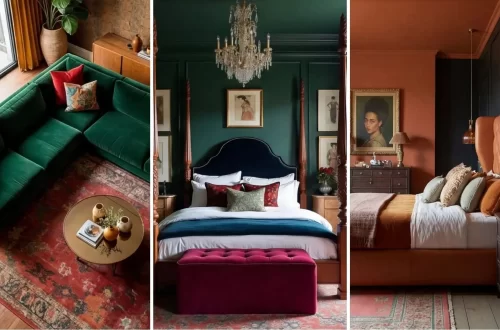
Heavy velvet sofa, dark wood, and layered rugs call for Amber, Oud, or Warm Musk — molecules that match the visual weight of the space.
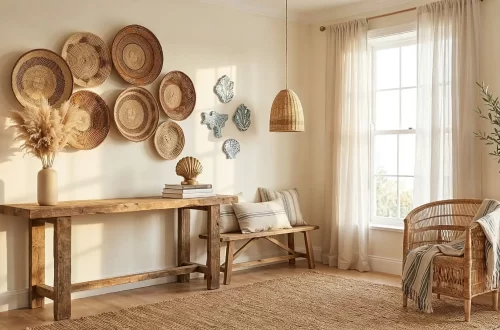
Light linen, rattan, and natural light were designed for Jasmine, Orange Blossom, or Neroli — airy florals that feel at home in a bright room.
And for glass, marble, and clean lines, it’s all about Mint, Eucalyptus, or White Cedar — sharp, modern notes that echo the architecture.
The Bedroom: Build a Sensory Cocoon

The bedroom’s job in 2026 is to help you stop. Stop scrolling. Stop processing. Stop performing productivity. The scent should support that.
Lactonic (milky) notes are having a major moment for this reason — think Coconut Milk, Shea, or Sandalwood Milk. They’re soft and unconsciously soothing. Layer them with:
- Oud Rose — the combination of rose and oud is both intimate and calming. It has been used in East African and Arabian bedrooms for centuries
- A jasmine candle for reading nights — both are traditionally used in North and West Africa as relaxing, sleep-adjacent florals
- Spray your curtains and throws with your chosen anchor scent. Fabric holds fragrance for days.
You May Also Like: An Expert 7-Step Guide to Elegant African Bedroom Decor
The Bathroom: Non-Negotiable Spa Energy

The bathroom deserves more than whatever candle you grabbed last. When you’re giving your skin real attention — a long bath, a proper skincare routine — the scent should match the energy.
Jasmine is the move for a bath candle: sensual, warm, and rooted in North African beauty traditions. Orange Blossom works beautifully as a guest bathroom spray — it’s familiar enough to feel welcoming and sophisticated enough to feel intentional.
If your bathroom runs cool and bright, Mint or Eucalyptus gives spa-adjacent freshness without trying too hard.
The Pro Tips Worth Keeping
The Anchor Principle: Use the same base note — say, a light Musk or Frankincense — across every room in your diffuser. It gives the whole house a coherent identity. Then use your candles and sprays to differentiate each zone. One house. Many moods.
Keep Your Diffuser Simple: If your candles and room sprays are already complex (multiple notes, layered accords), your diffuser should be a single clean note. If everything is loud at once, nothing is interesting.
Spray the Softs: Air dissipates. Fabric doesn’t. Spray your curtains, throws, and rugs with your anchor scent and the fragrance will be there two, three, four days later — still quietly working, long after you’ve forgotten you sprayed it.
Scent stacking is just the modern name for something ancient
It is about treating fragrance as part of how you build a home and welcome guests. The tools have changed, the principle hasn’t. And if your home has a scent, make it one worth remembering.